You Do You
A plan is only useful if you can stick to it. “I’m going to cut sweets out of my diet” is a thing a person might say. Then a week later the dam breaks, and they find themselves gorging themselves on a carrot cake from Whole Foods. Hypothetically, of course.
This dynamic comes up all the time in investing. Intellectually, rebalancing your retirement portfolio is obviously correct. But when it comes time to sell the stuff that has done great and buy the stuff that has stunk, suddenly doubt creeps in. Many folks can’t get themselves to push the button and do the trade.
Which brings us to dollar-cost averaging (DCA). It’s a topic we get asked about frequently. DCA is when you have money to invest, and instead of investing it immediately you drip it into the market over time. There are a million ways people do this - spreading it over a month or a quarter or a year, or having some kind of trigger where you invest it if the market falls below some threshold. All of the methodologies have two things in common: 1) they feel good 2) they cost you money most of the time.
The conceptual reason why DCA costs you money is not hard to understand. The return of your money market fund (MMF) is less than half of the expected return of your investment portfolio. Every day you sit in the MMF, that difference accumulates, making it more and more likely that you are worse off.
Tons of folks have done the empirical work to validate this. Here’s one table I found with a good overview across asset classes. Historically, DCA would have cost you money in every asset class the large majority of the time.
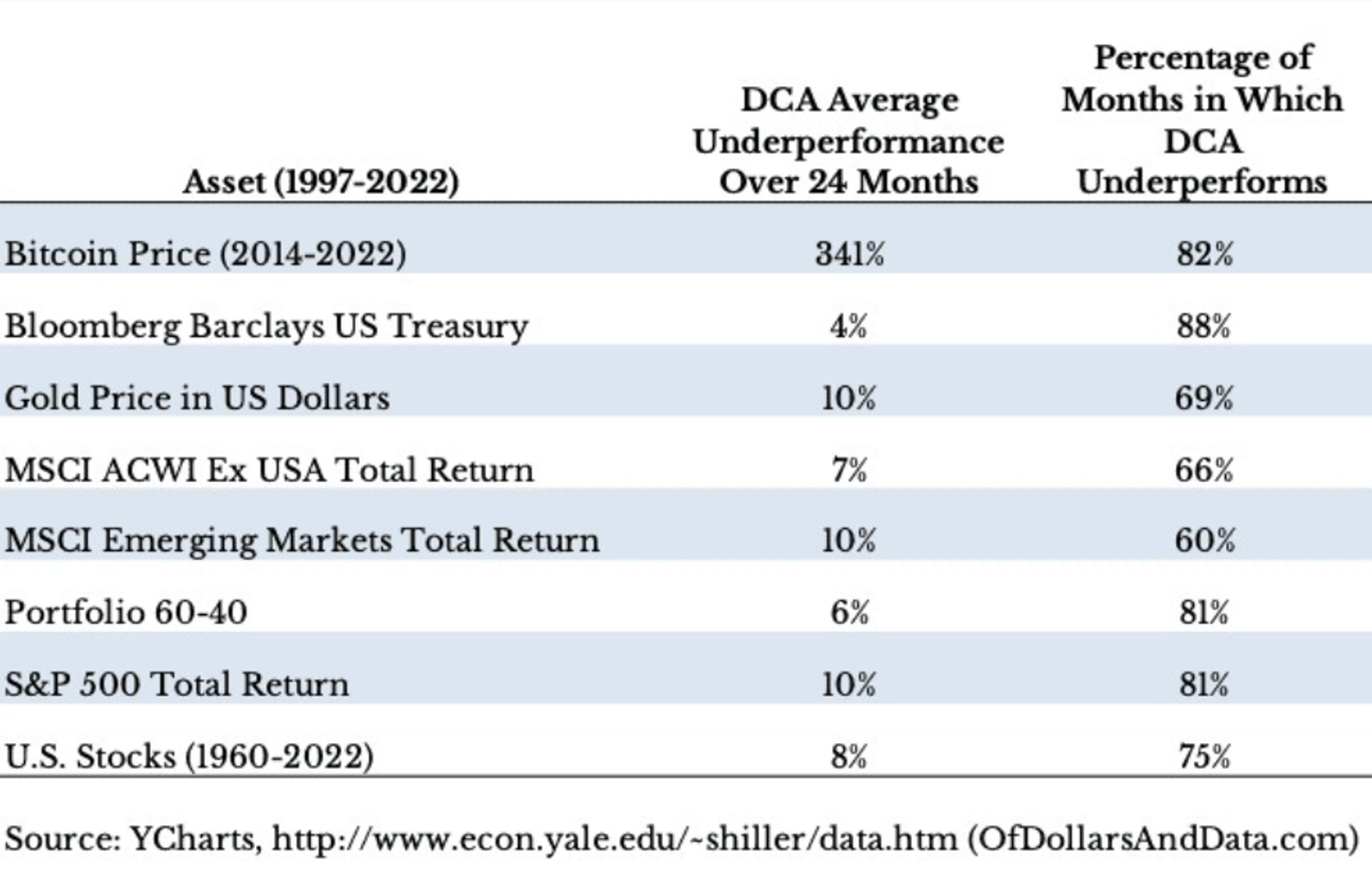
So why did I title this article “You Do You?” Because we are not robots (yet?), and an important goal for your money should be to give you peace of mind. If you know that a market crash immediately after you invest is going to make you furious, then DCA is nothing more than an insurance policy. You pay a premium and insure against emotional volatility. That’s reasonable! We give our clients the data on the pros and cons, and let them choose what feels good to them.