When the facts change, I change my mind
Our view is that most investors' thinking on illiquid assets like PE and VC is backwards. To us, successful investing is about maximizing the amount of return you can generate for the risks you take. If you are going to add risk in any form to the portfolio, you'd better be adding return too. Illiquidity is a risk. It ties up your cash and in doing so prevents you from changing your mind and adapting as the world changes. This can meaningfully detract from returns, because it keeps you from redeploying capital into juicy new opportunities, and from pulling capital from investments that are no longer attractive. In effect, investing in illiquid assets means forfeiting a valuable option - an option that today is about as valuable as it ever gets, because of how rapidly the world is changing.
It could be worth it! Like almost any risk, at some prices you should accept it and at other prices you should not. That's why we think it is backwards for investors to say "I want 10% of my portfolio to be illiquid" instead of "if an illiquid opportunity is compelling and compensates me well for the extra risk I will take it, up to 10% of my portfolio."
With that as context, McKinsey recently released an interesting piece scanning the state of private markets (linked at the bottom). A couple of charts from that report with our thoughts:
Multiples being paid for private deals are roughly at all-time highs. Over the last 15 years, the cost of a dollar of earnings has almost doubled:
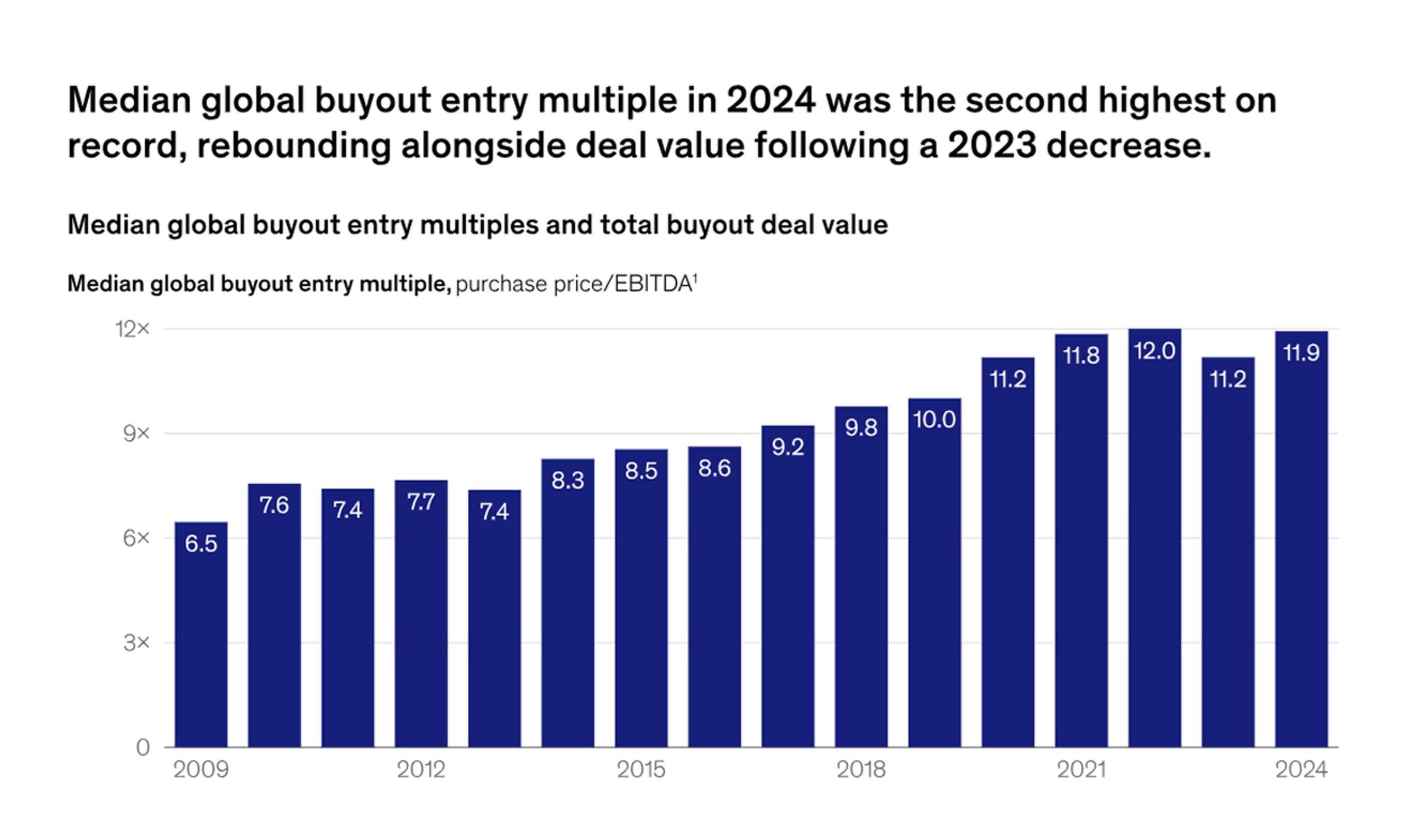
Median Global Buyout Entry Multiples and Total Buyout Deal Value
This has happened alongside a rise in institutional allocations to PE/VC. I actually find this chart a little misleading - allocators have made a small % change to private equities, but on an enormous asset base. In dollar terms this represents an incremental ~2tn flow, which coincidentally (maybe?) is roughly the amount of dry powder the industry is sitting on.
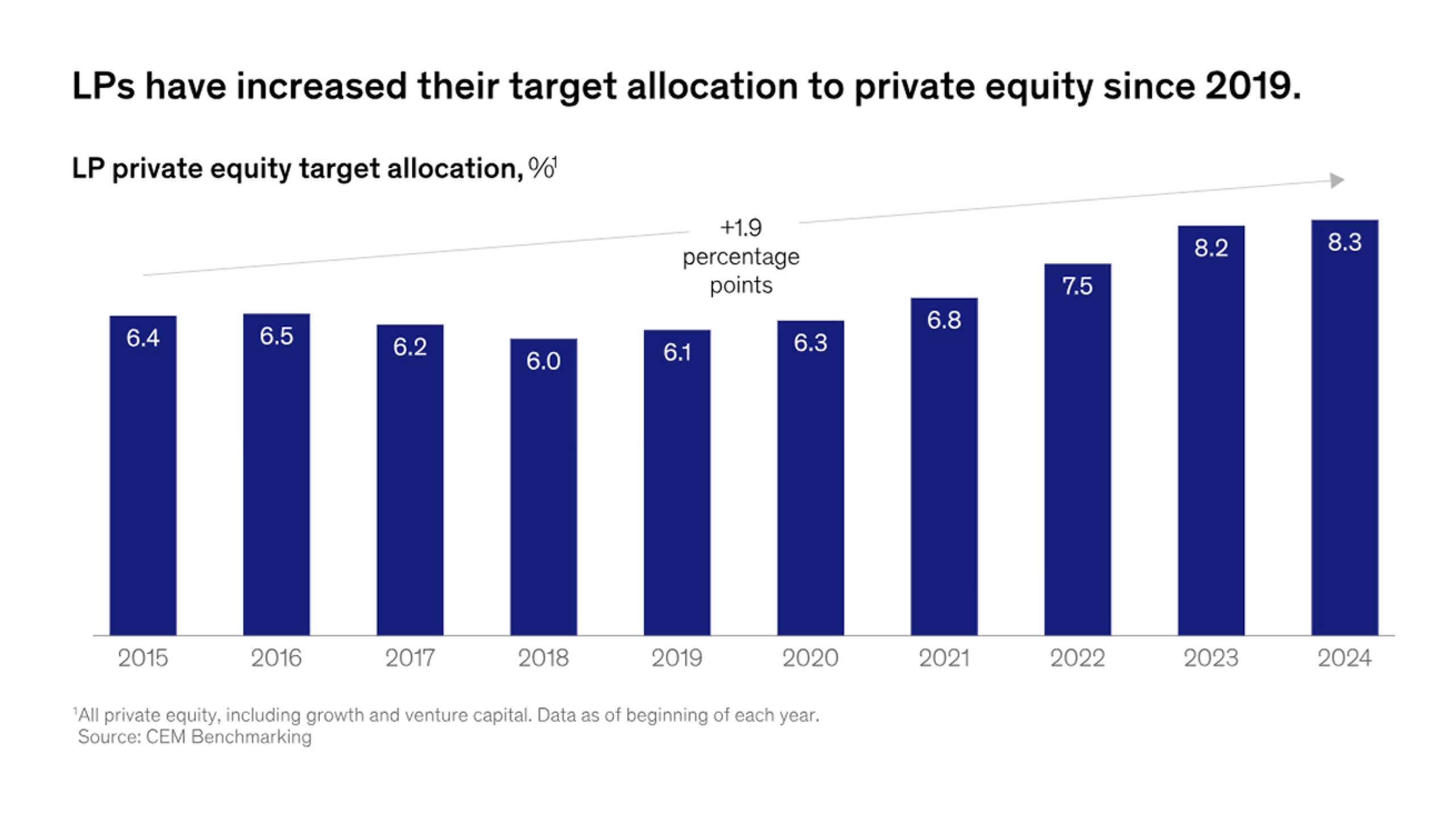
LP Private Equity Target Allocation
These charts imply that money has flooded into illiquid assets faster than compelling opportunities have been created. This supply/demand imbalance has significantly lowered the premium investors get for taking liquidity risk. While this premium is not directly observable, we suspect 0 is a generous guess. The table below shows this dynamic at work. Between 1999 and 2014, there was a fat liquidity premium and PE/VC investors did much better than public market investors did. Since 2014 though, it has gotten worse and worse.
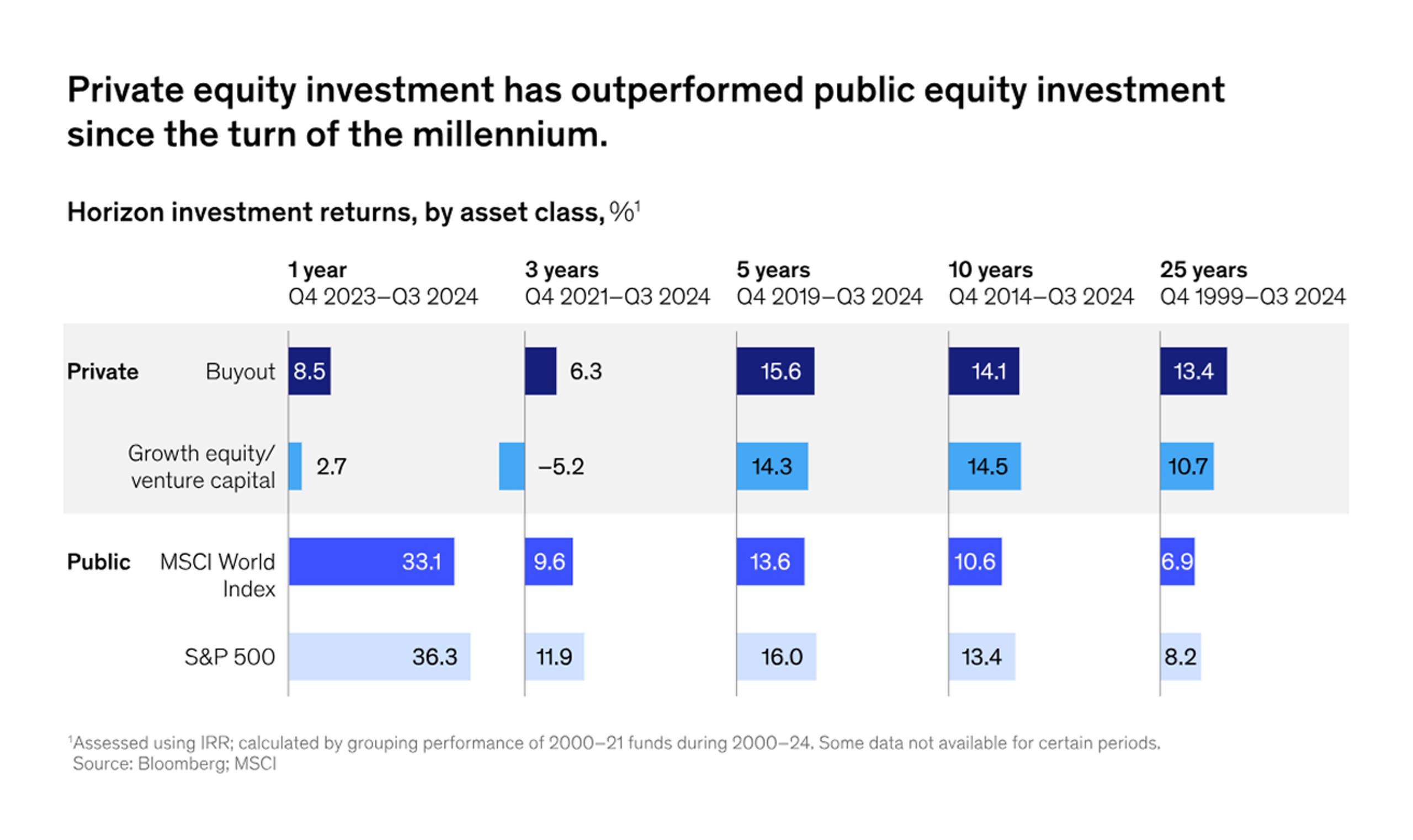
Horizon Investment Returns, By Asset Class
Where does this leave us? Well, there is still that 2tn in dry powder for GPs to put to work. Either much of that money will be put to work at bad entry prices or noses will be held and markdowns will come. Meanwhile, almost half of PE "exits" are just sponsors handing bags back and forth. No one - including us - knows with certainty how this will resolve, but it looks to us like the ingredients for a complete mess. And our advice to investors is that unless you have a compelling, idiosyncratic reason to believe a private investment is special in some way (which again, could be true!), think twice about giving away the valuable option to change your mind.