What Does the Word "Commodity" Even Mean?
If you go hunting for a definition of “commodity,” you are bound to run into the word “fungible.” If a thing is “fungible” it means all copies of them are basically the same. Interchangeable. That’s (part of the reason) why a steak and cheese sub is not a commodity, because none of my options here in Boulder are interchangeable with the glorious subs at Bob Nadeau’s in Manchester, NH. But if I need aluminum, well, aluminum is aluminum.
Fungibility ensures that there is one price for a commodity. If copper costs 5 bucks in Boston and 10 bucks in New York, you’ll quickly get people buying copper in Boston (pushing up the price) and selling it in New York (pushing down the price), until the price difference doesn’t make up for the transport costs of moving it from one place to the other. There are ridiculously successful companies that do this globally across commodities - buy it in one place, move it, and sell it for a profit someplace else.
At least, that is how it works on paper. Reality can be messier. And with the duel wars going on now - the trade war and the hot war in Iran - the very meaning of the word “commodity” is getting mangled.
If you can’t move a commodity from A from B, there is no mechanism to force prices to converge. This could happen, hypothetically, if you were afraid your ship was going to be blown up by mines or drones. Bloomberg published this great chart last week, showing the dynamic in oil. You can see how similar oil prices were before the conflict, and how dissimilar they are now. Fungibility has been broken.
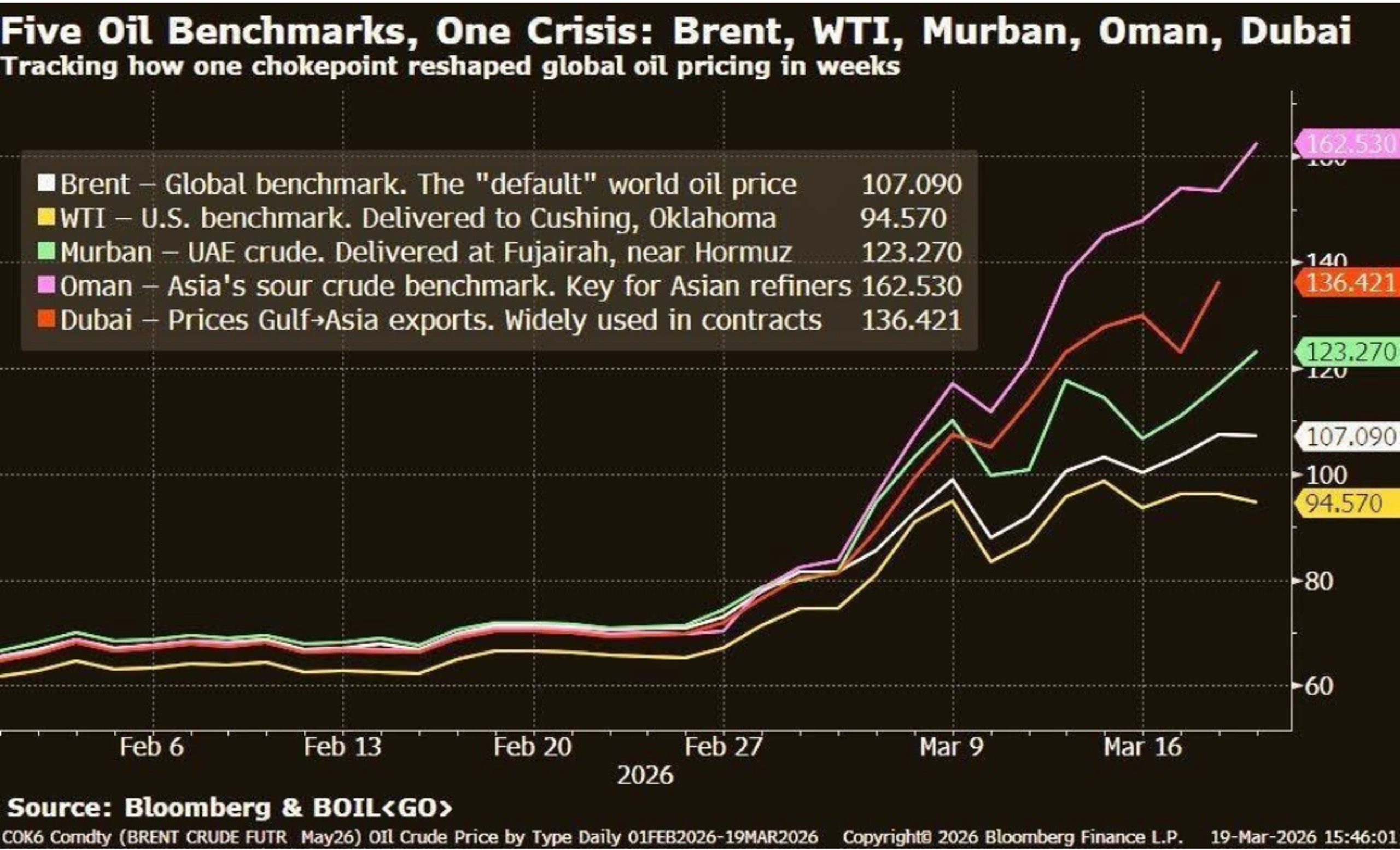
Relatedly, I’ve been getting the question “why hasn’t the price of oil gone up more?” Part of the answer is “what do you mean by ‘oil.’ ” Based on the chart above, I doubt Asian refiners are asking this question.
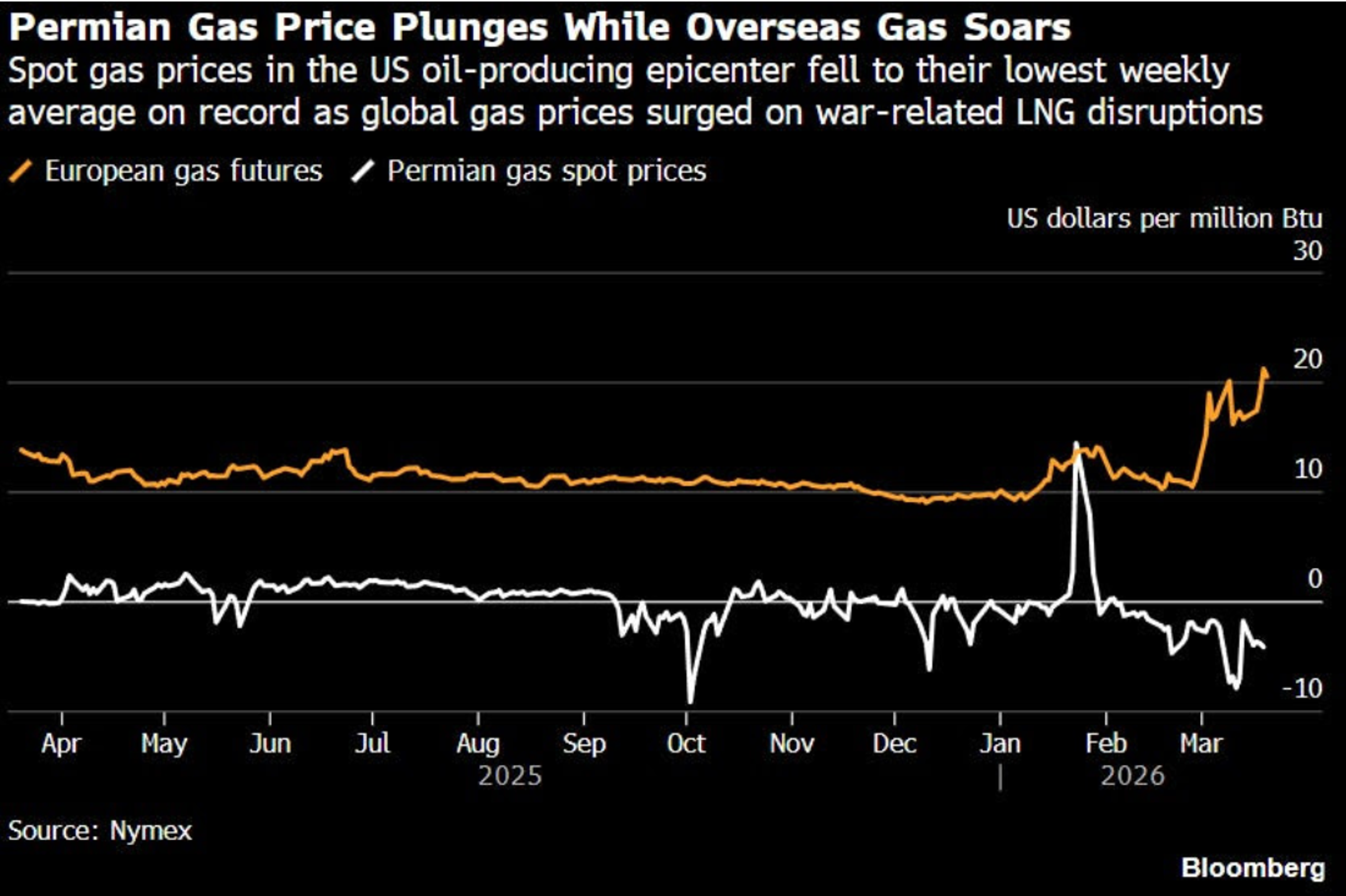
Some commodities are difficult to store and move. Natural gas is a classic example. If you produce gas in Texas, it’s hard to sell it in Europe. You need to liquify the gas - creating LNG - and then put it on special ships. If you go and read about this topic, you will encounter another vocabulary word: “cryogenic.” I’m pretty sure nothing that utilizes the word “cryogenic” is cheap or easy. But the world has been trying to change this. Our capacity to move natural gas from A to B has been growing rapidly, increasing the efficiency of the overall global market and bringing us modestly closer to one global price for gas. At least, that was the case, until Iran blew up a bunch of LNG capacity that will take many years to repair and rebuild.
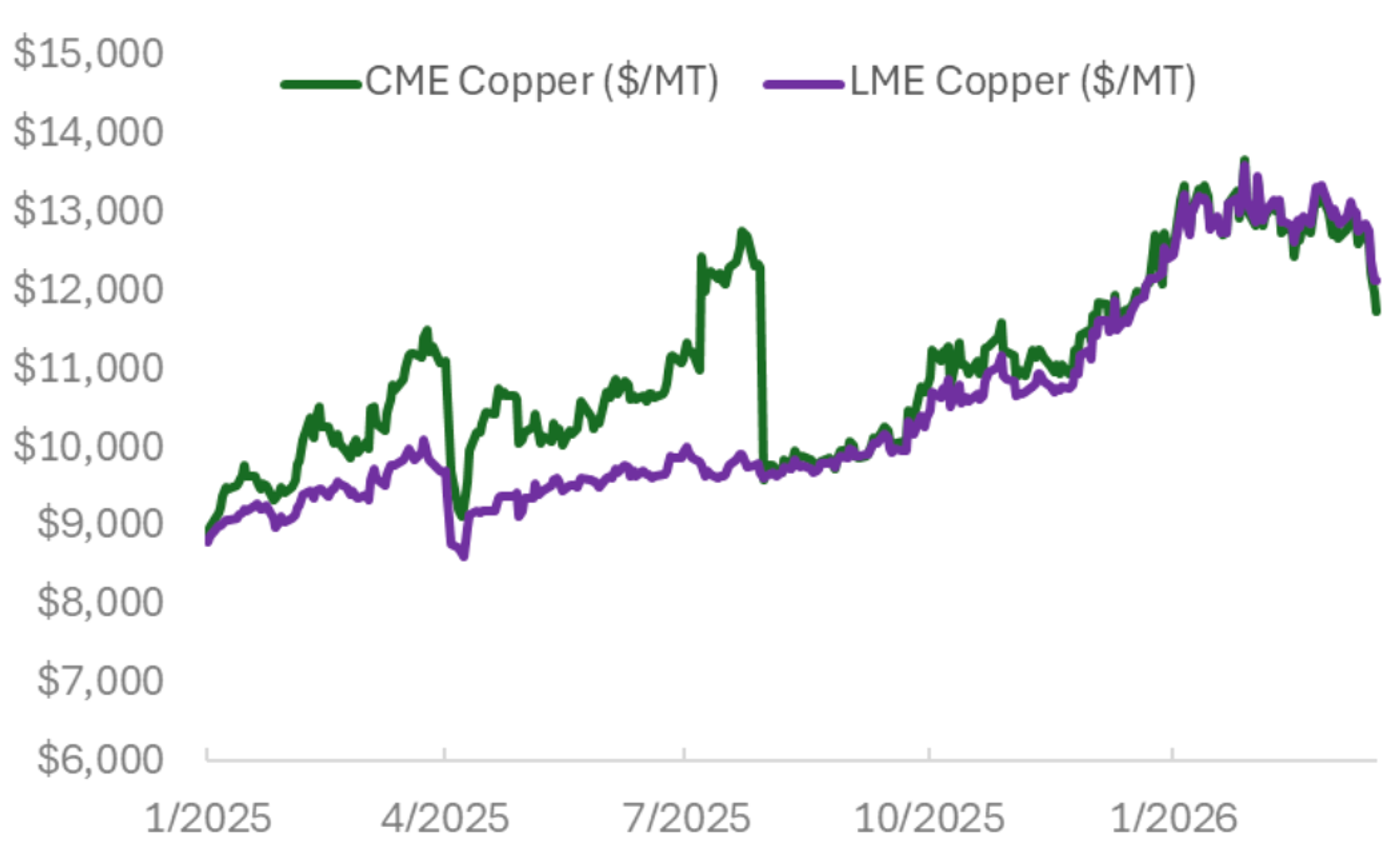
Metals are less exposed to a dustup in the middle east, but more exposed to a trade war. If New York put a $5 tariff on all copper imports from Boston, then it makes no sense to buy for $5 in Boston, sell for $10 in New York, and then pay all of the profits back via the tariff. So tariffs just structurally make prices different in different places. The chart below shows one stark example. CME Copper is the price in the US and LME Copper is the price in London. Copper is cheap to move and store, so the prices should be basically the same. Last year Trump said he was going to slap a tariff on copper, causing an expected tariff rate to get priced into the spread between the two. Then Trump said “just kidding” and the price of US copper collapsed back to the global price, where it has remained ever since.
Globalization compressed physical distance into an afterthought—capital, commodities, and information started moving with a kind of frictionless efficiency that made markets feel almost continuous. But that same interconnectedness is now showing its fault lines, with geopolitics, tariffs, and protectionism reintroducing friction into the system - particularly in commodities. Understanding the implications of that in a granular way will be an important part of managing money for the foreseeable future.