We won't run out of copper, but…
When you conduct granular commodity supply and demand analysis, sometimes a funny thing happens...your analysis tells you that supply and demand are going to diverge. The chart below from a large asset manager is typical of the genre. According to their estimates, by 2050 the world will be using 3x the copper that is being produced. It's not hard to understand why sensationalistic images like this have a way of going viral:
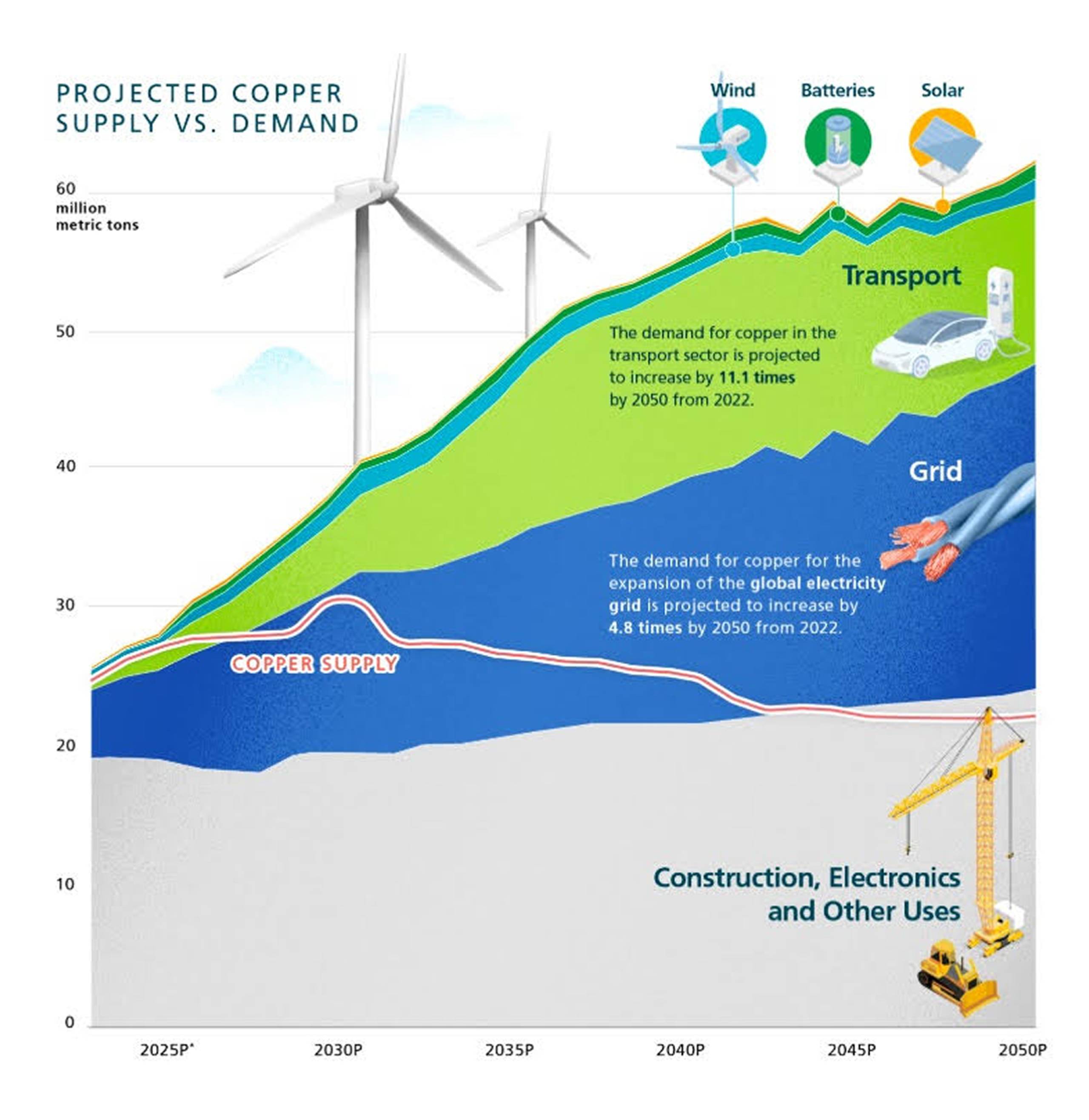
Projected Copper Supply VS Demand
So does this mean we are going to run out of copper? No, definitely not, this chart is ludicrous. It's ludicrous because commodity markets evolve and adapt, and this chart assumes the entire market will march off a cliff like a bunch of lemmings. Price always closes the gap - first by changing behavior, then by incentivizing new permanent capacity. When the market gets tight, the first responder is scrap. At one price, the old transformer in the yard is junk. At a higher price, it is feedstock. Motors get unwound. Cable is stripped. Tesla charging stations get vandalized. Scrap metal moves because the bid is finally worth the work. At the same time, buyers change behavior. Projects slip a quarter to the right. Engineers reopen drawings and trim copper usage. Aluminum takes more of the load where physics allows. Each decision looks small in isolation, but in aggregate it brings the market back into balance.
We think we have entered one of those periods where price has some heavy lifting to do. The catalyst is the disaster last month at the Grasberg mine in Indonesia. Seven people were killed in a mudslide that knocked a few percent off of global copper supply, supply that will probably not return to full production until 2027. We think this has created a moment where - barring the Chinese and/or global economy falling out of bed - the copper price will have to rise further to get things back into balance. We are positioned accordingly.
A reasonable question one might ask is, "why will it take so long for the production to come back?" The short answer is - it's a nightmare to even get there, never mind to get equipment there. The better answer is this fascinating (if a bit dated) documentary about why the construction of the mine took decades.