The UK is a Canary in the Coal Mine
I’m taking my family on vacation next week, which is why there won’t be a Substack. As part of that vacation we are going to Disneyland. If you don’t know what Disneyland costs these days, I recommend you sit down before you check. The experience of booking the trip has made me curious about other entities that had destroyed their own finances, which led me to the UK government.
Unto itself, the UK economy doesn’t matter much to the US or the world. However, it’s worth studying as a “canary in the coal mine” - it has the most acute versions of some of the problems that much of the developed world faces. No one knows exactly how those problems will ultimately resolve themselves across countries, so watching the UK for clues makes a lot of sense.
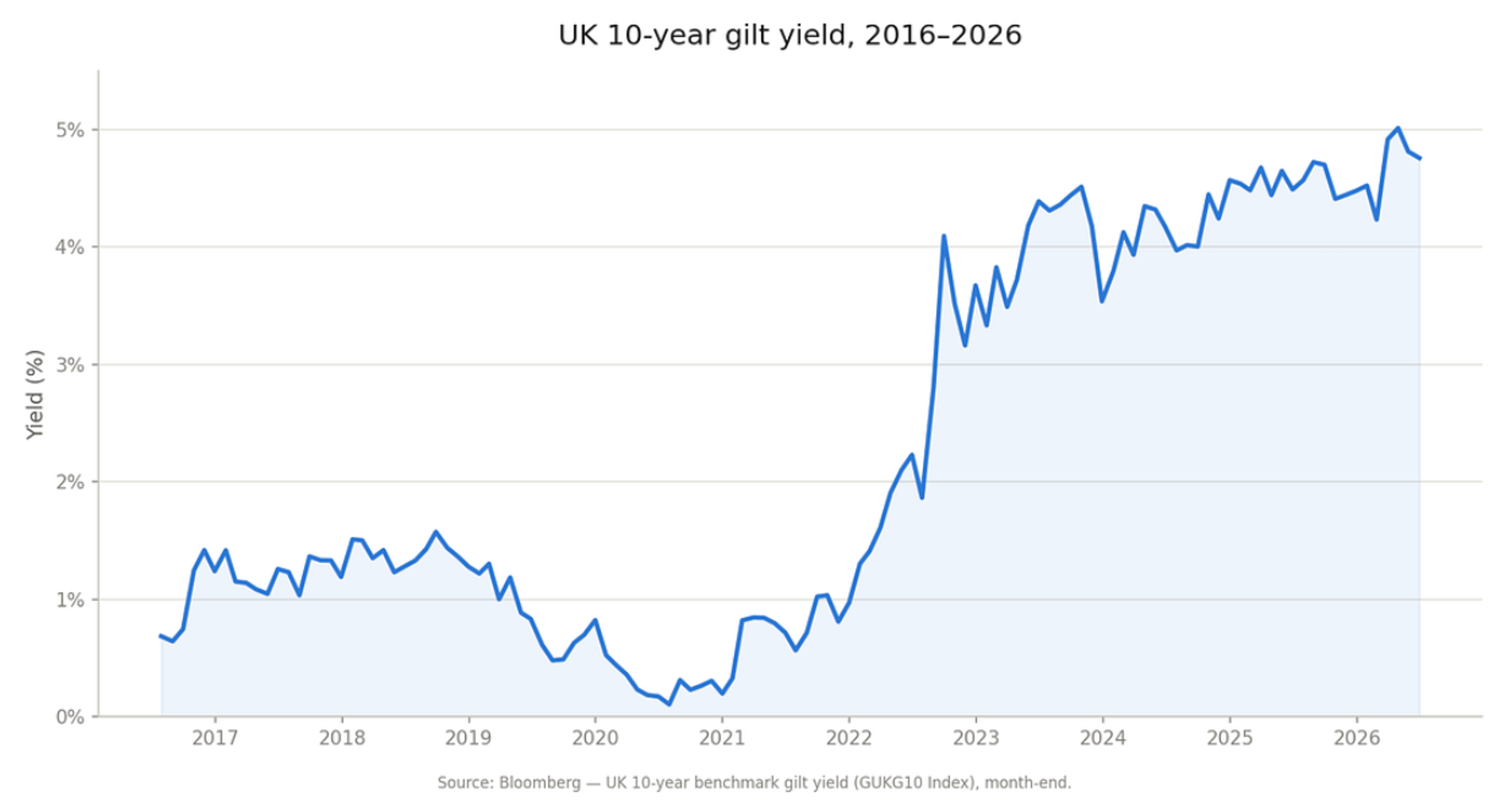
When a government spends more than it takes in - which is called a “fiscal deficit” - the government has to borrow money through bonds to cover the difference. The yield on those bonds is set by the market, and reflects how much compensation is required to pull potential creditors out of the woodwork and compel them to lend. Higher yields imply a less-attractive borrower, and vice versa. The UK currently has the highest government bond yields in the developed world, and pays slightly more to borrow than the Czech Republic and slightly less than Hungary. Not exactly rarified air.
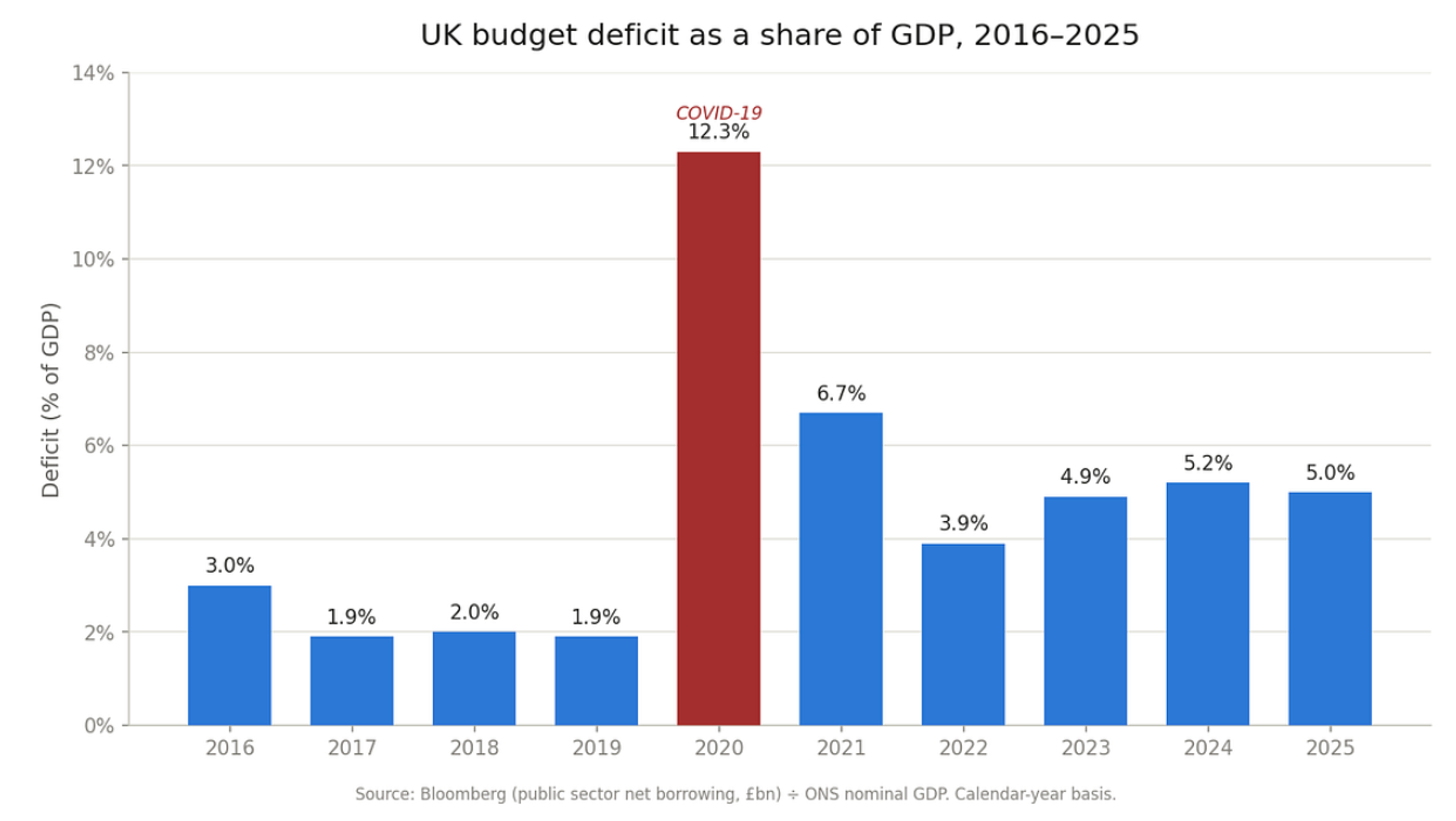
Looking at their spending behavior, it’s not hard to understand why lending them money isn’t exactly triggering Beatlemania 2.0. Deficits are running at more than double what they were pre-Covid.
If your cousin asked you for a loan at Thanksgiving, you’d be more willing to do it if he had exciting prospects for his income. No one is describing the UK economy as having “exciting prospects.” Since the start of 2022, the cumulative change in productivity is negative. In other words, UK workers produce less per hour than they did 4 years ago. Annual IPO volume is outside of the global top 10, and the net new business creation numbers are frighteningly close to 0. If you look at the 10 largest companies in the UK, the youngest is Unilever, looking spry at 97 years young.
These factors, combined with some others that we consider, have caused us to chuck UK bonds into the “uninvestible” dustbin and remove them from our global strategic portfolios. We’re not predicting the imminent implosion of the UK, but with a situation like this, we’d rather be too early than too late.