Munis Are Overrated
I have long been confused by municipal bonds. On one hand, there is near-unanimous belief amongst financial advisors and their HNW clients that munis deserve a meaningful allocation. On the other hand, munis directly violate my mental model for how retail investment products are created and marketed. Retail investors generally get pushed into products with good stories and high fees, that are often detrimental to their long-term financial health. I’m supposed to just believe that there is a benevolent market that is structured to specifically benefit retail vis-a-vis institutions? Something smells funny.
So we did the work. And let me start by saying that the work was difficult. Step one was getting everything on an apples-to-apples basis. But some bonds are callable, some are not. Some bonds are general obligations of the borrower, and some will default if the town pool doesn’t sell enough lemonade on Tuesday. Etc etc. These things are snowflakes, which probably meaningfully contributes to misconceptions about them. But we grinded through, bond by bond, and came up with a normalized universe of 337 bonds, with a total market value of about $17 billion. For each we calculated a tax-equivalent yield to treasuries with the most generous assumptions - no transaction costs to buy them (and they tend to be expensive to buy), you own bonds from your own home state and you never leave, you never sell them so no requirement of a liquidity premium, and you are in the top tax bracket. Under those generous conditions, you make a little bit of money if you are willing to lend for longer time periods and take some idiosyncratic risk, but not much. And shorter-duration munis are basically a wash. There is no free lunch.
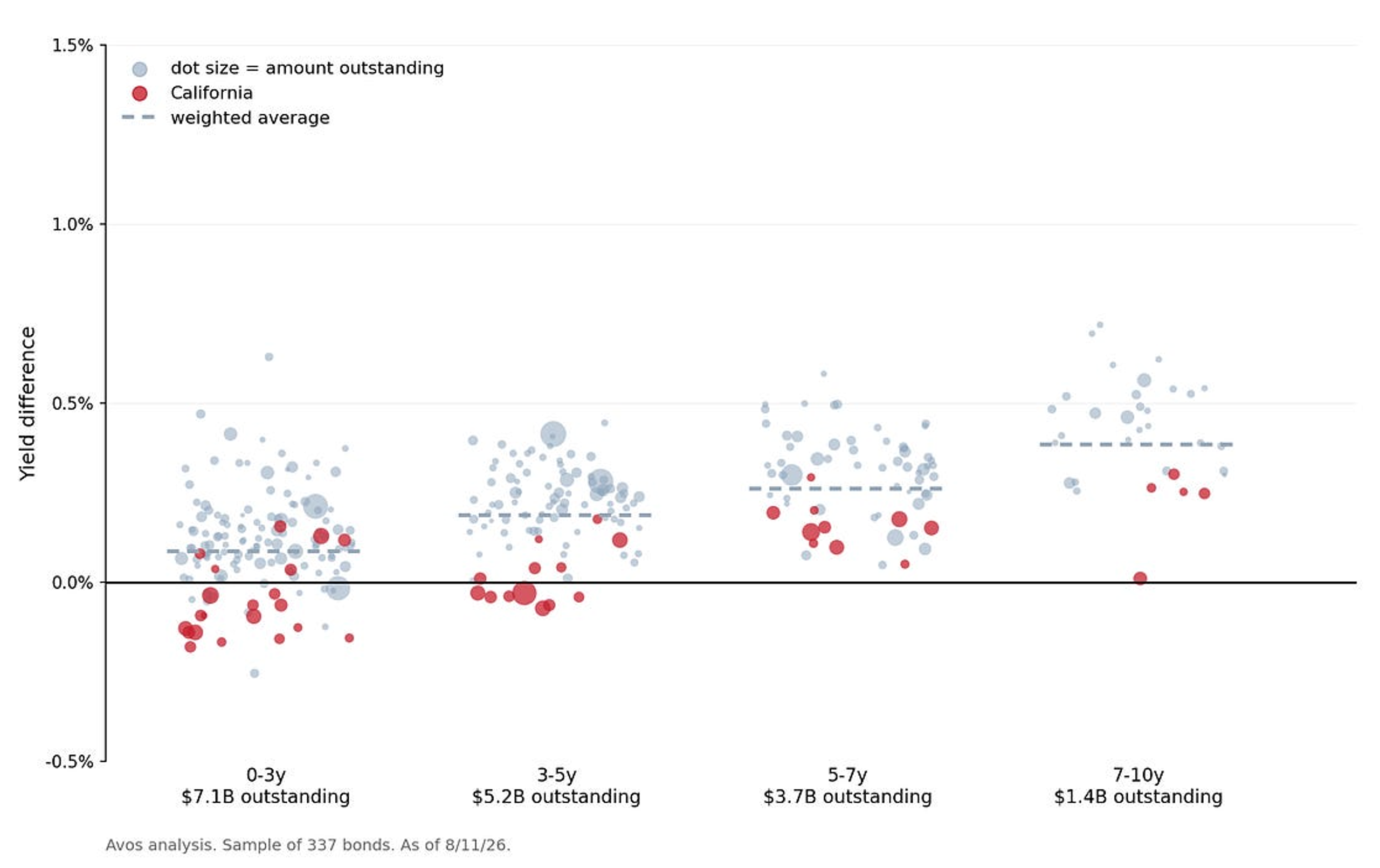
It’s worth noting that the picture is worst in California. This is such a classic dynamic - California has high tax rates, so everyone wants tax-advantaged bonds, which means the prices get bid up past fair value, which means the returns stink.
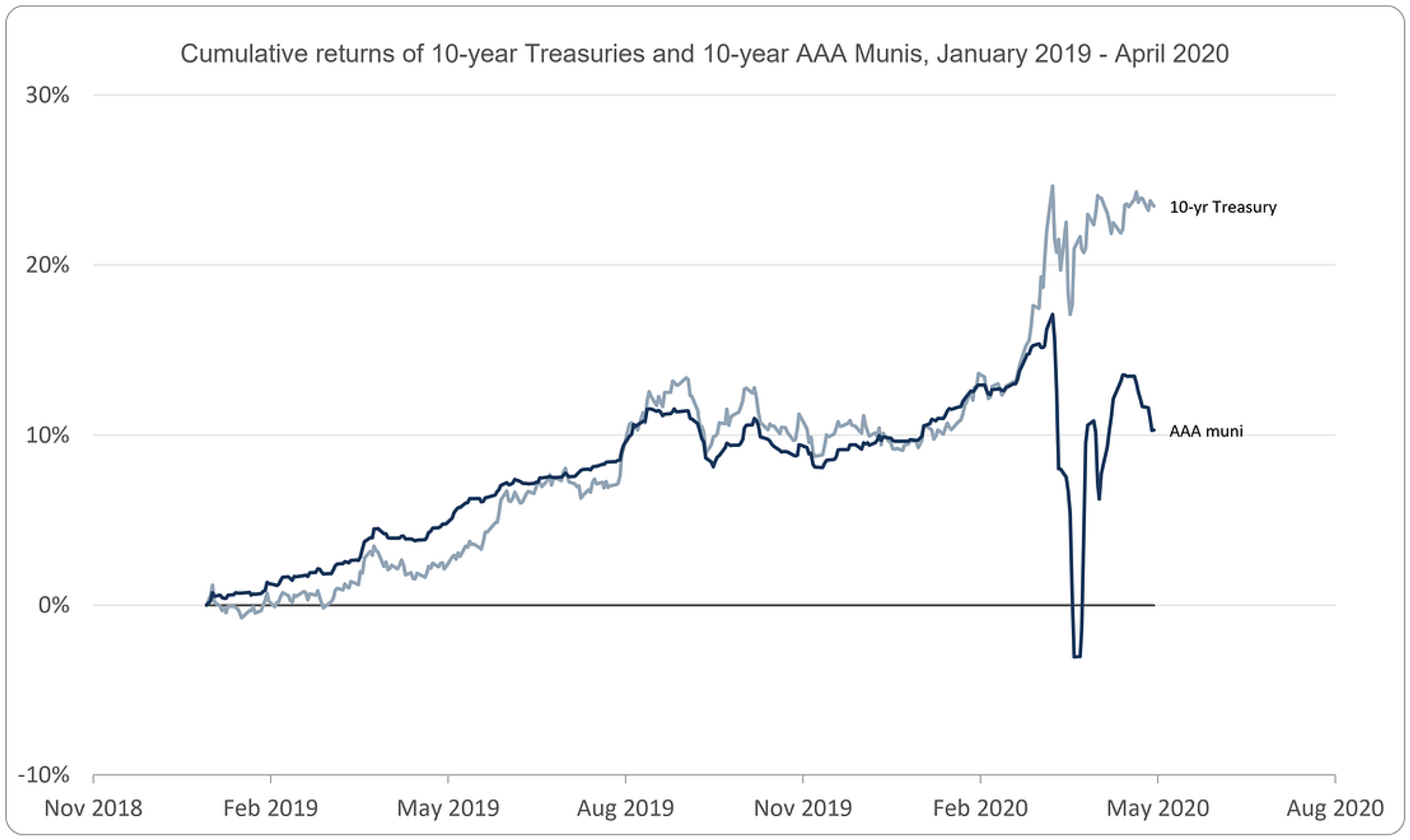
When considering whether to include something in your portfolio, it’s also important to consider when it will make and lose money. That’s diversification, and it gives you a smoother ride through bumpy times. Munis are downright horrible along this dimension. They usually behave like treasuries, except when you need them most, at which point they behave like credit instruments. The chart below shows the Covid period. If you owned treasuries you made money that could be rebalanced into cheap equities. If you owned munis, they just exacerbated your problem.
Like any other asset class, there will be better and worse ways to hold munis. And some of you may genuinely have access to brilliant muni magicians that are able to pick and choose the right issuances for outsized returns. I don’t. So for me, in my portfolio, I am much happier holding treasuries.