Economics is Cold and Callous
When we talk about an “economy,” we are talking about a ridiculously diverse set of actors. GDP per capita in New York is more than double what it is in Mississippi, but policymakers are forced to aggregate that into a single synthesis that drives policy. “The economy is strong” a central banker might reasonably say on TV to the painfully unemployed person watching it. It creates a structural callousness to economic analysis, since your synthesis is always a sort of average, which by definition means there is always a large swath of people doing worse. As an investor it means putting your humanity and empathy aside and just coldly crunching the numbers.
The US labor market today puts that on full display. As the name says, labor is a “market” subject to the rules of supply and demand. When there are too many workers and not enough jobs, the price of labor - wages - falls. And vice versa. The chart below from the Atlanta Fed shows the picture: wage growth has fallen from the super inflationary levels in 2022, but is still well above most of what we have experienced since the GFC. The price of labor is telling you the market is fine.
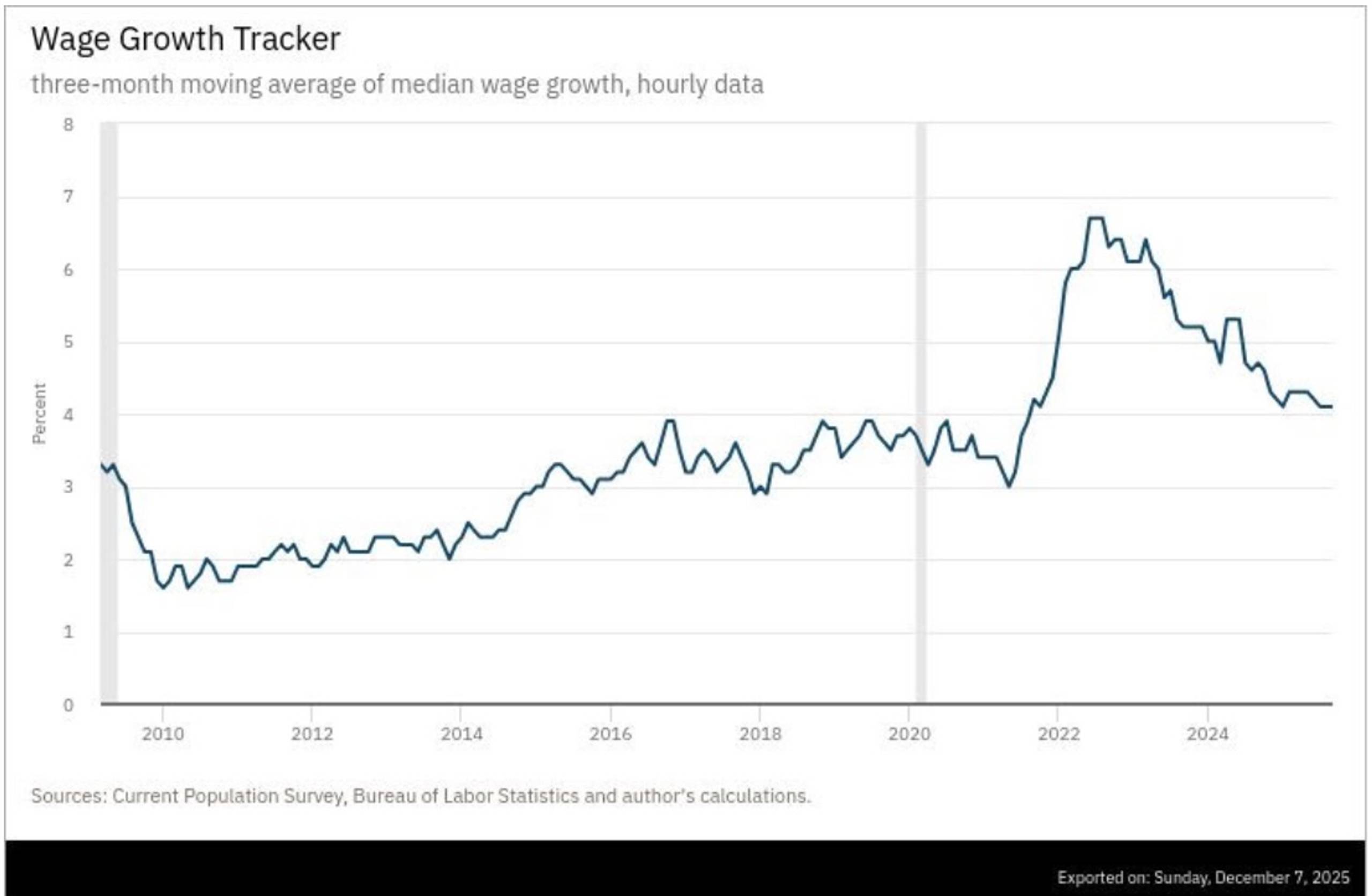
But how can that be? Hasn’t demand for labor obviously fallen? We get headlines every week with layoff announcements, and the labor stats say we aren’t adding many jobs every month!
Yes, that is true - and callously, we are lucky it is true. Because if it weren’t true, we’d have an inflationary mess on our hands. Why? Because while the demand for labor has fallen, the supply of labor has also fallen a lot. If we lost all of those workers without losing some jobs, the supply/demand balance for labor would cause wages to rocket. Our labor comes from two sources. We still grow some the ol’ fashioned way, though not as many as we used to because of our demographics. Also, workers migrate here...or at least they used to. The chart below shows our best estimate of net migration into the US. As Sesame Street taught us, one of these things is not like the others.
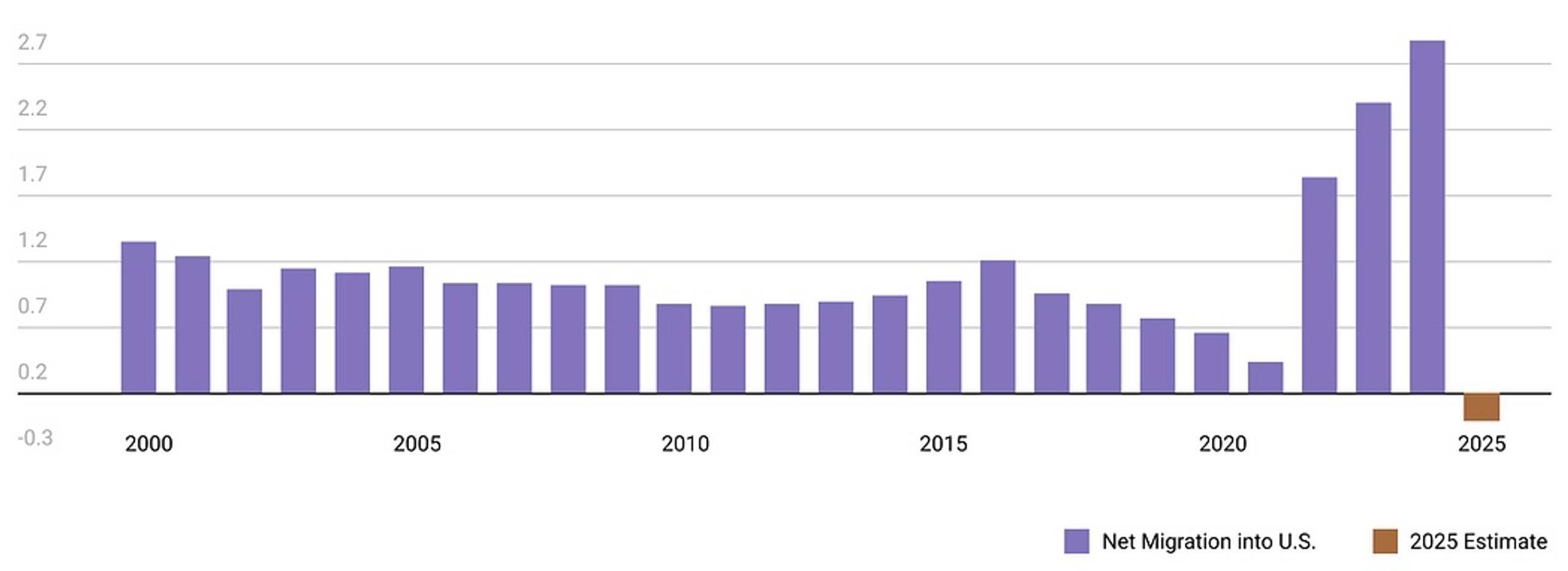
The net impact of all of this is that the labor market is starting to look more and more like Japan’s. Japan’s work force doesn’t grow. Unemployment is super low, but if you do end up unemployed it takes forever to find a new job because there is no dynamism. No one is hiring, just like no one is firing. It creates a new normal where the 100k+ monthly job creation numbers we have grown accustomed to are a thing of the past. And unless lowering interest rates indirectly causes a bunch of babies to be conceived, it isn’t going to do anything helpful.
The Fed is going to ease this week on the pretense that the labor market is not ok and inflation is ok. We see conditions as the opposite, and believe this policy mistake will put a nice tailwind behind commodities and a headwind to the dollar.