China Doesn't Want to Be Over a Barrel
The ongoing trade war has reframed how we view global supply chains. Partnerships we might have previously called “cost-effective” and “efficient” are now called “vulnerabilities.” China is being starved of the most cutting-edge chips on which AI is being built, and are scrambling to build their own domestic capabilities. Meanwhile in the US, we are hearing about how neodymium and dysprosium are apparently critical to everyday life and only produced in China. I guess my teacher Mr. Trapotsis was ahead of the curve when he made us learn about esoteric elements in high school chemistry.
But long before Trump was re-elected and the trade war ignited, China was already working to reduce its biggest point of vulnerability. China is – by far – the largest importer of oil in the world at a staggering 11 million barrels every single day. 11 million barrels, laid end to end, would stretch from Beijing to London. Yikes.
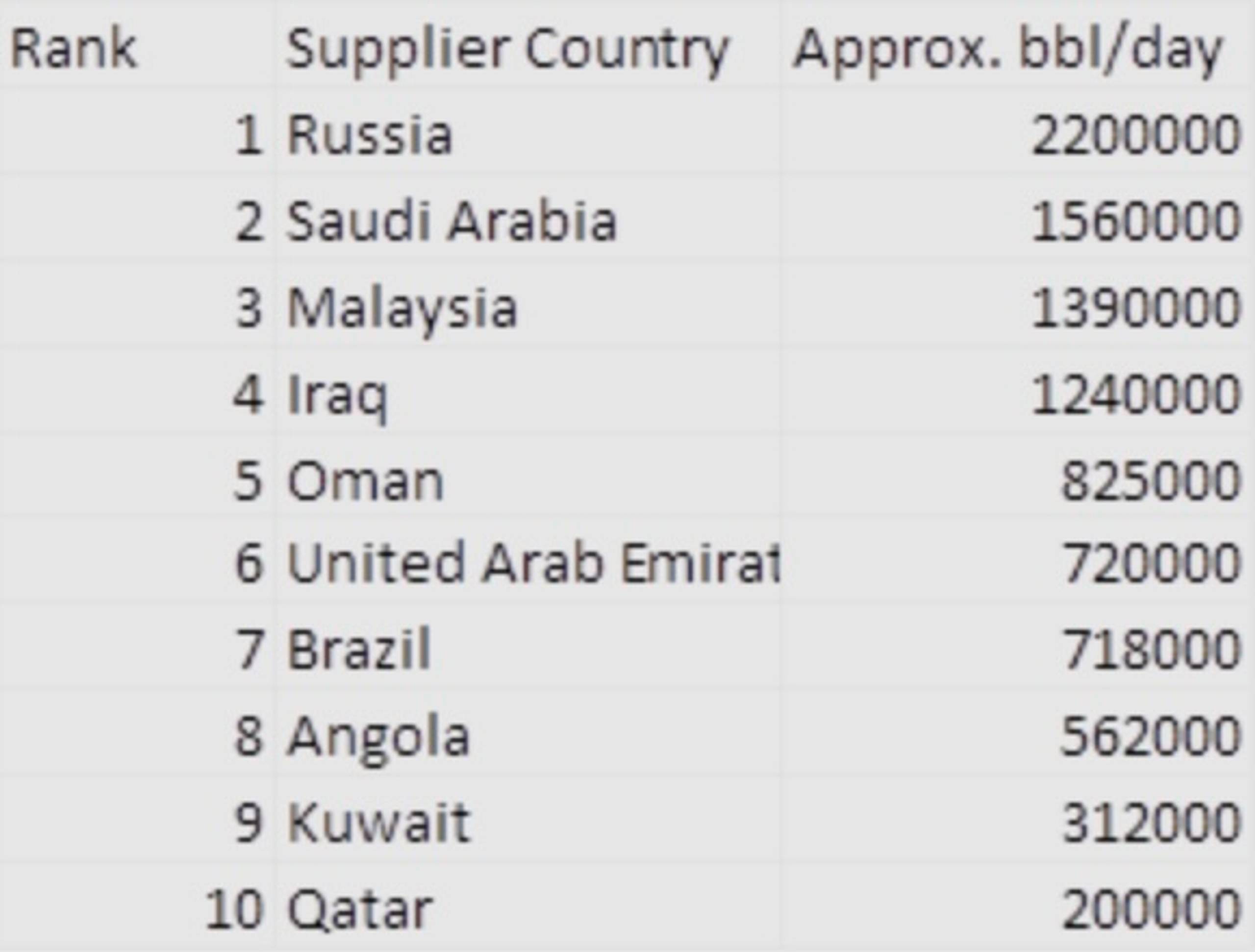
So how do you reduce such a staggering reliance on foreign countries? To start, find suppliers that can’t weaponize their oil, because they actually need you more than you need them – i.e. sanctioned countries. The table below shows where China gets their oil. It’s not a surprise that Russia is number 1 and the US – despite being the largest oil producer in the world by far - doesn’t crack the top 10. The only real surprise on the list is “Malaysia.” I use quotes because Malaysia’s exports to China are 4 times the volume of oil they pull out of the ground. There is absolutely no doubt that some savvy Malaysian businessmen are making a pretty penny laundering Iranian and Venezuelan oil.
Another way to reduce vulnerability is to grow domestic production, and China has been on one heck of a spending spree to that end. In the last 6 years China has spent half a trillion dollars on exploration and drilling and clawed themselves up to 5th place in the world in total oil production. Meanwhile, they’ve been socking oil away for a rainy day – adding roughly a million barrels a day to their storage this year. At this point their reserves are 4 times bigger than the US strategic reserve, tipping the scales at around 1.2 billion barrels – over 100 days of coverage if there were a total stop to their ability to get oil from abroad.
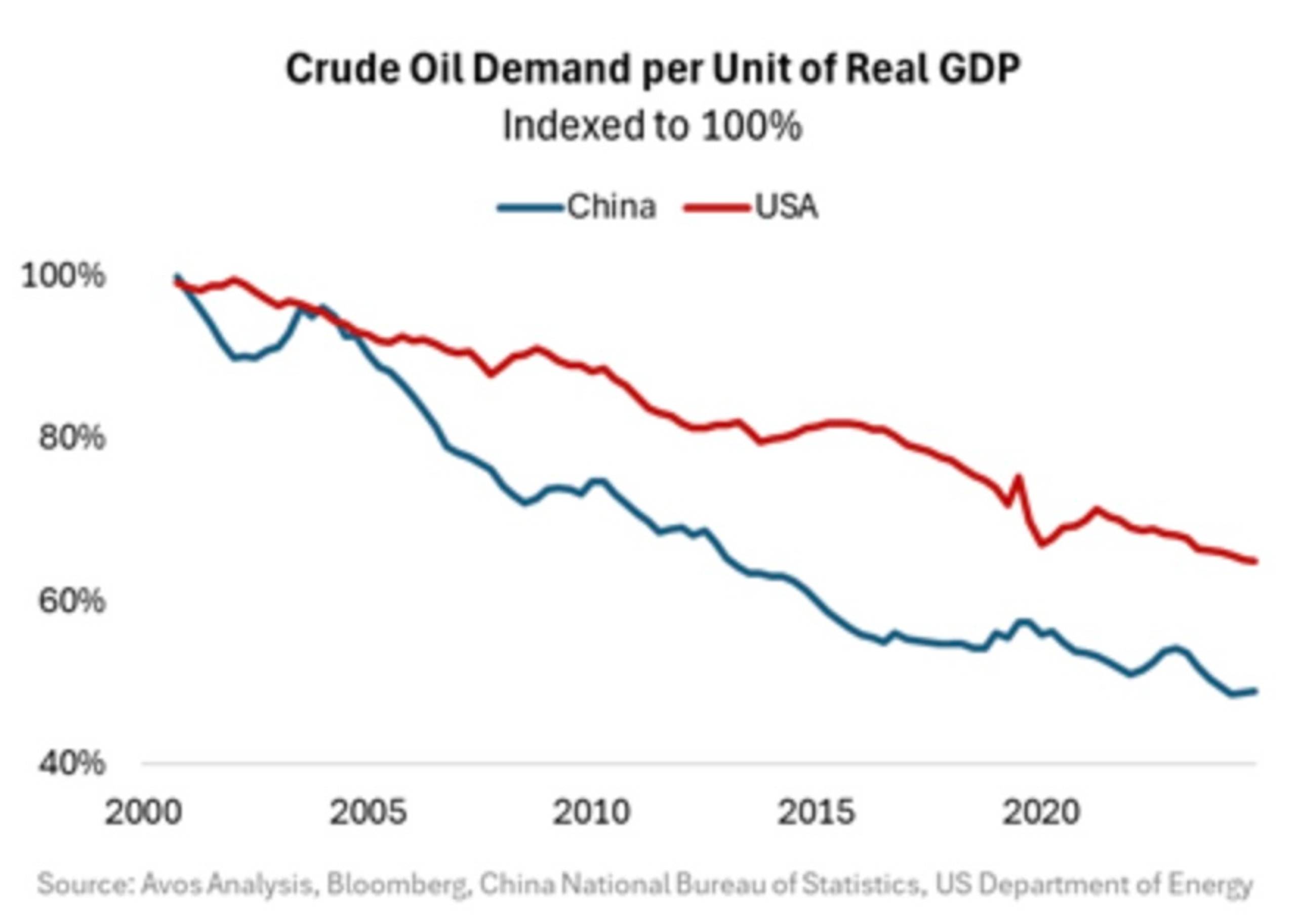
The last leg of the stool is reducing demand. The nice thing about this goal is that you can make pretty good headway just by going about your normal day - humanity is constantly improving the energy efficiency of our economic activity through the normal mechanisms of technology advancement and capitalism. The chart below shows how much oil it takes to generate a dollar of real GDP for the US and China. Since the year 2000, the US has knocked about a third off this metric, and China is close to half.
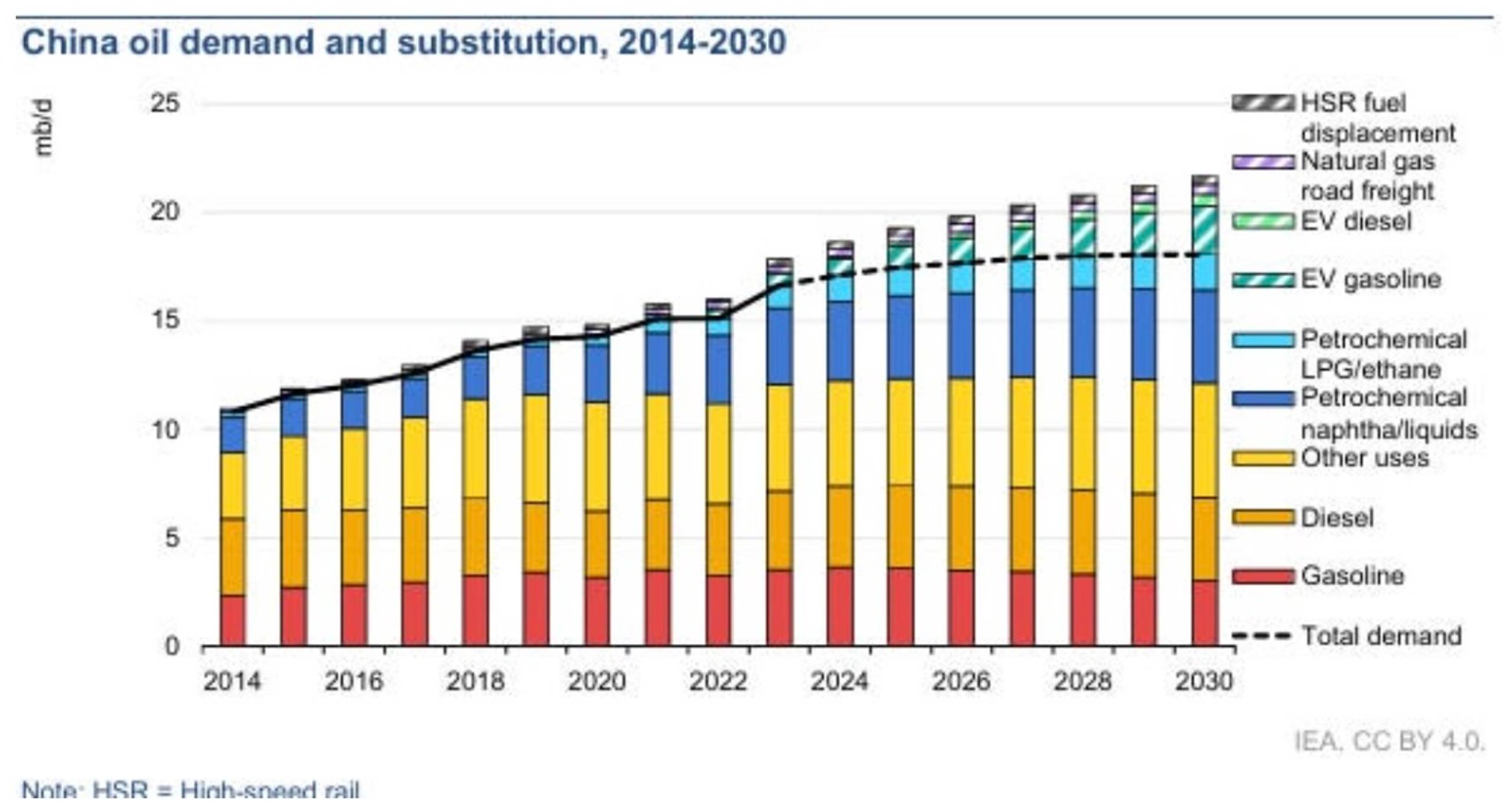
The other way to reduce demand is substitution – swap out oil for some other energy source. No matter how hard that is to do in your head, you are underestimating how hard it is. This chart is from the IEA. The way you read this chart is that the total height of each bar is how much oil they would have used if there was no substitution away from gasoline and diesel transportation. The checkered parts of the bar are areas where oil product demand has been displaced. Half of EVs in the entire world are in China, and you still need a magnifying glass to see the impact on their oil demand.
For the last decade, China has been the primary engine of global oil demand growth. If Beijing has its way, that will no longer be the case, and the evidence points to them having their way. Meanwhile, global investment in oil supply has been woefully inadequate for many years, creating concerns about maintaining and/or growing global production. How will those two secular trends net out? Our guess is “poorly,” and that betting against a repeat of the relatively placid price action in oil over the last two years has a nice expected value.