Calling Homer Simpson, Again
In March, I wrote a piece titled “Calling Homer Simpson,” available in the archives at avos.co/research. The goal of the piece was to call balls and strikes on media narratives around nuclear power, from our seat as active traders of uranium and uranium miners. A lot has changed since then - and a lot hasn’t - so we wanted to give an update on the state of the global nuclear boom.
Point 1: Nuclear investments are very long-term in nature, so they require confidence that both political parties are on board. And they are.
In 2024, the Biden administration passed the ADVANCE Act via a nearly unanimous vote in both branches of Congress. The act laid important groundwork to reduce the burden and regulatory risk around building new nuclear capacity. Since then, the Trump administration has continued and even accelerated that push, ensuring the Act is implemented, adding to the government support of nuclear through executive orders and signing a deal with Westinghouse with the ambitious goal of quadrupling US nuclear output by 2050. It’s interesting to contrast that with the uptake (or lack thereof) from major oil companies in terms of expanding in Alaska. The oil majors are concerned that the next time the Democrats are in charge, their permits will be yanked and their investments will be wasted, which is a reasonable thing to be concerned about!
Point 2: Despite the government tailwind, US nuclear expansion will be far too slow to align with AI power needs.
Despite all the talk, there are still no new reactors under construction in the US. Half of global construction is in China, the rest is sprayed between Europe, Asia, and Egypt. The map below from The World Nuclear Industry Status Report 2025 shows the picture.
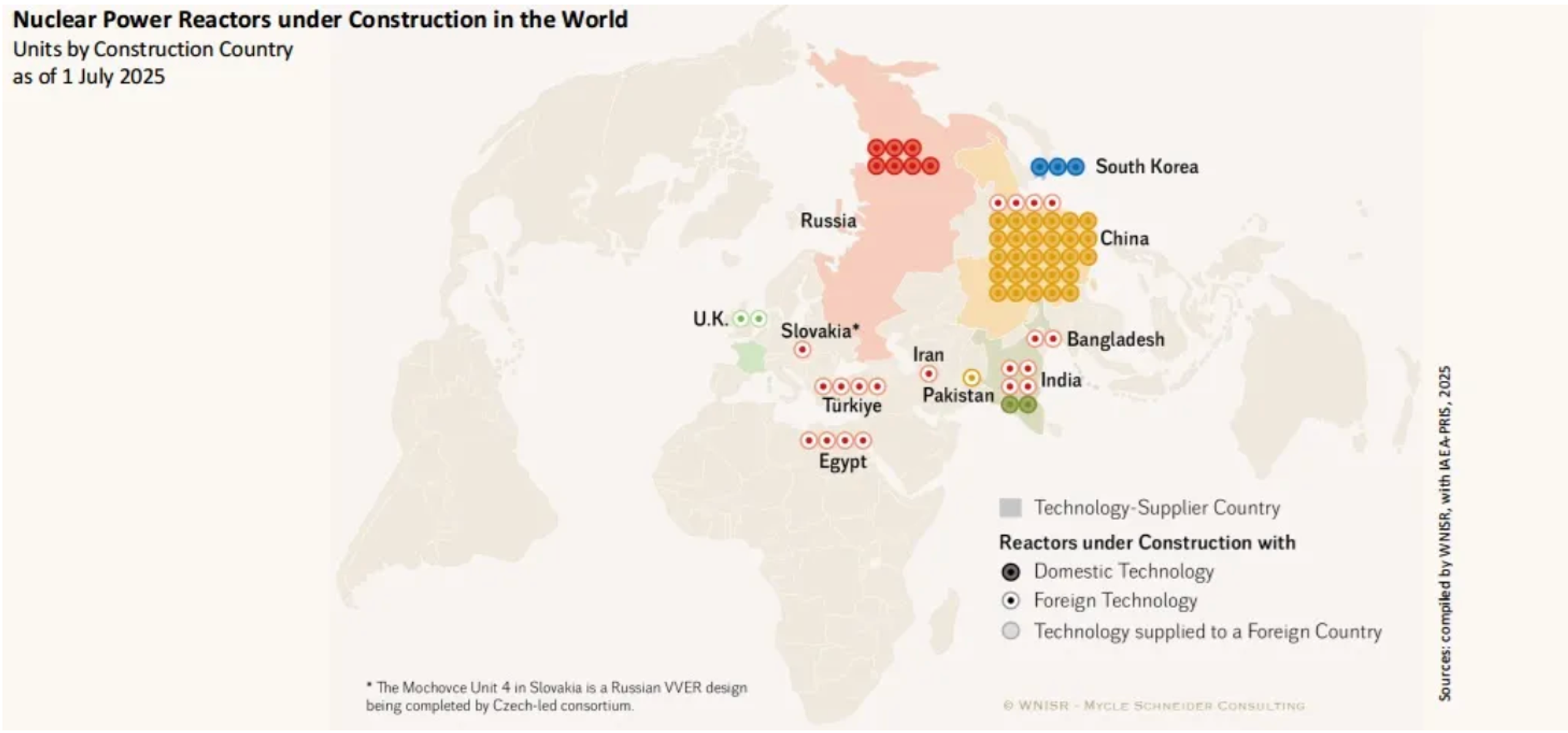
And even if we did start building reactors, we are out of practice and will probably stink at it for a while. The only plant we’ve built recently was Vogtle, which was a spectacular disaster - it took 11 years and cost over $30bn. Meanwhile, China pumps these things out in 6 years at a fraction of that cost. That means we are probably looking at a best case scenario of 2035 before meaningful new nuclear capacity can hit in the US, waaaay too slow for AI ambitions.
Point 3: That includes Small Modular Reactors, known as SMRs, which for all of the hype are not close to being useful.
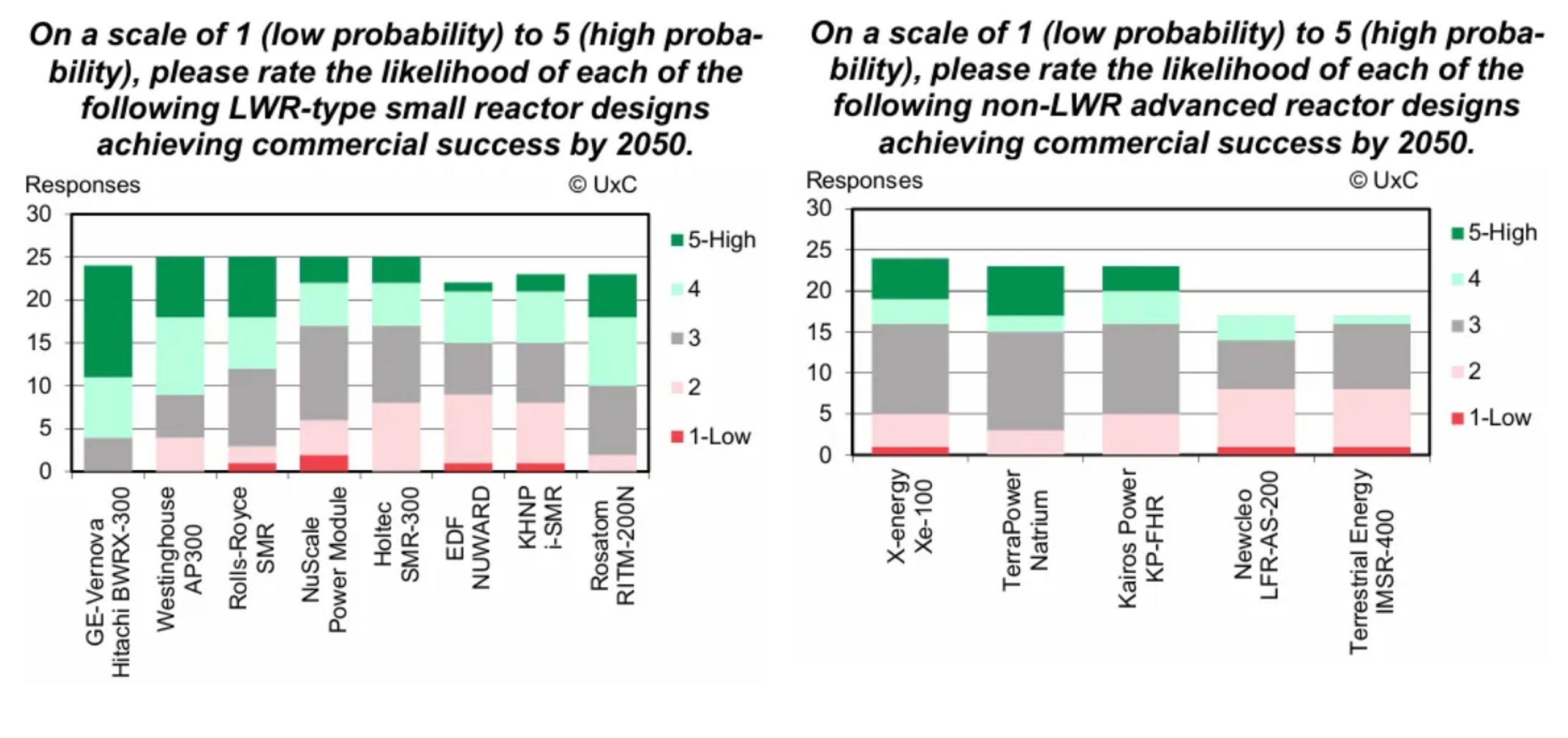
There is a huge difference between building a demonstration reactor that doesn’t malfunction and large scale deployment at high capacity factors. The chart below is from a survey of industry insiders conducted by UxC. The fact that the timeframe they are asking about is “by 2050” tells you most of what you need to know about SMRs.
Point 4: We’ve added some uranium mining capacity, but still not nearly enough.
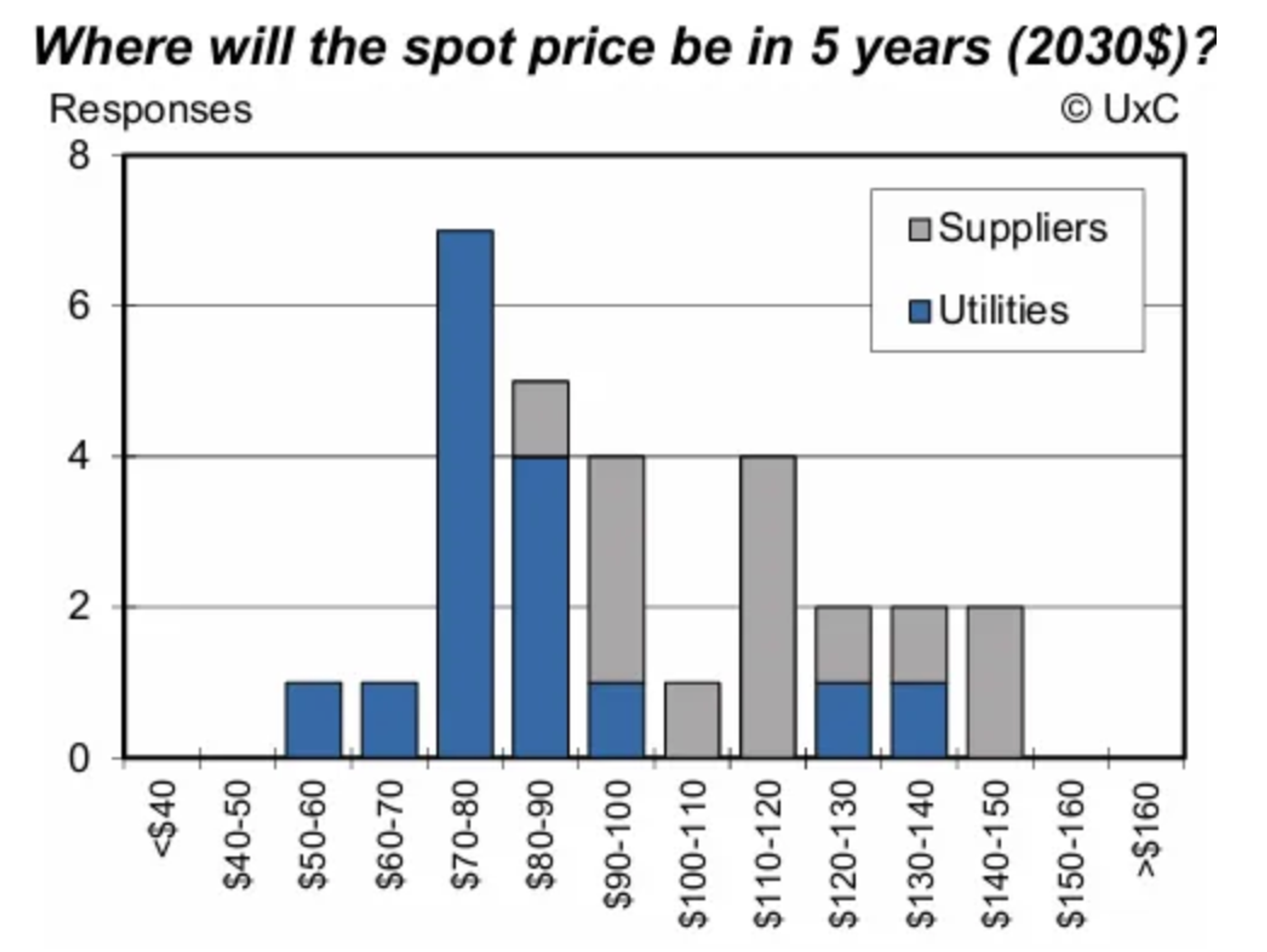
While it is impossible to be too precise or confident with these numbers, our best estimate is that the world uses up 180mm lbs of uranium a year and pulls 160mm lbs out of the ground. The gap is filled by drawing down inventories (which built up massively post-Fukushima) and a smattering of recycling. There is a fascinating dynamic in the market where the utilities believe that the new mines in development (from Denison, NexGen, and Paladin) will deliver on schedule and reduce the pressure in the system, so they are preferring to burn down inventories rather than pay what they perceive as high prices. Meanwhile, actual miners are like “lol, that’s adorable that you think a mine can be completed on time.” Relevant UxC survey below. Of course everyone talks their book to a degree, but in this case their actions are consistent with their words.
Point 5: The largest public nuclear mining companies are richly priced, so we are positioned in physical uranium and a smattering of lottery-ticket junior miners.
“Bubble” is too strong a word, but overall the capital that has flowed into the public market space has been too big to all be efficiently allocated. Cameco does have a decent chance of growing into its valuation and is a reasonable long-term holding, otherwise we are staying away from larger and medium-sized players. Most of our exposure at this point is in the physical uranium trusts, which could benefit from squeeze-like dynamics if/when news comes out that those mining projects aren’t all smooth sailing.