A Stocking Stuffer for Finance Nerds
I often get asked for investing book recommendations. My top choice is always the same: “When Genius Failed” by Roger Lowenstein. My well-worn paperback copy clocks in at 243 pages, small enough to cram into a Christmas stocking.
The book covers the most spectacular hedge fund blow-up in history, LTCM. For those not familiar with the story, go read it. But the short version is that they made a bunch of trades that relied on tomorrow looking like yesterday, and leveraged them to the sky. Then the world changed, as it always does, and they went busto. This in turn meant they couldn’t honor their contracts with their trading counterparties, creating a massive domino effect of losses, and they might have taken down the entire financial system if the Fed didn’t step in. You can see their performance below in a table from Yahoo Finance. A -92% year is really incredible — even Madoff didn’t ultimately lose anywhere close to that much of his clients’ money.
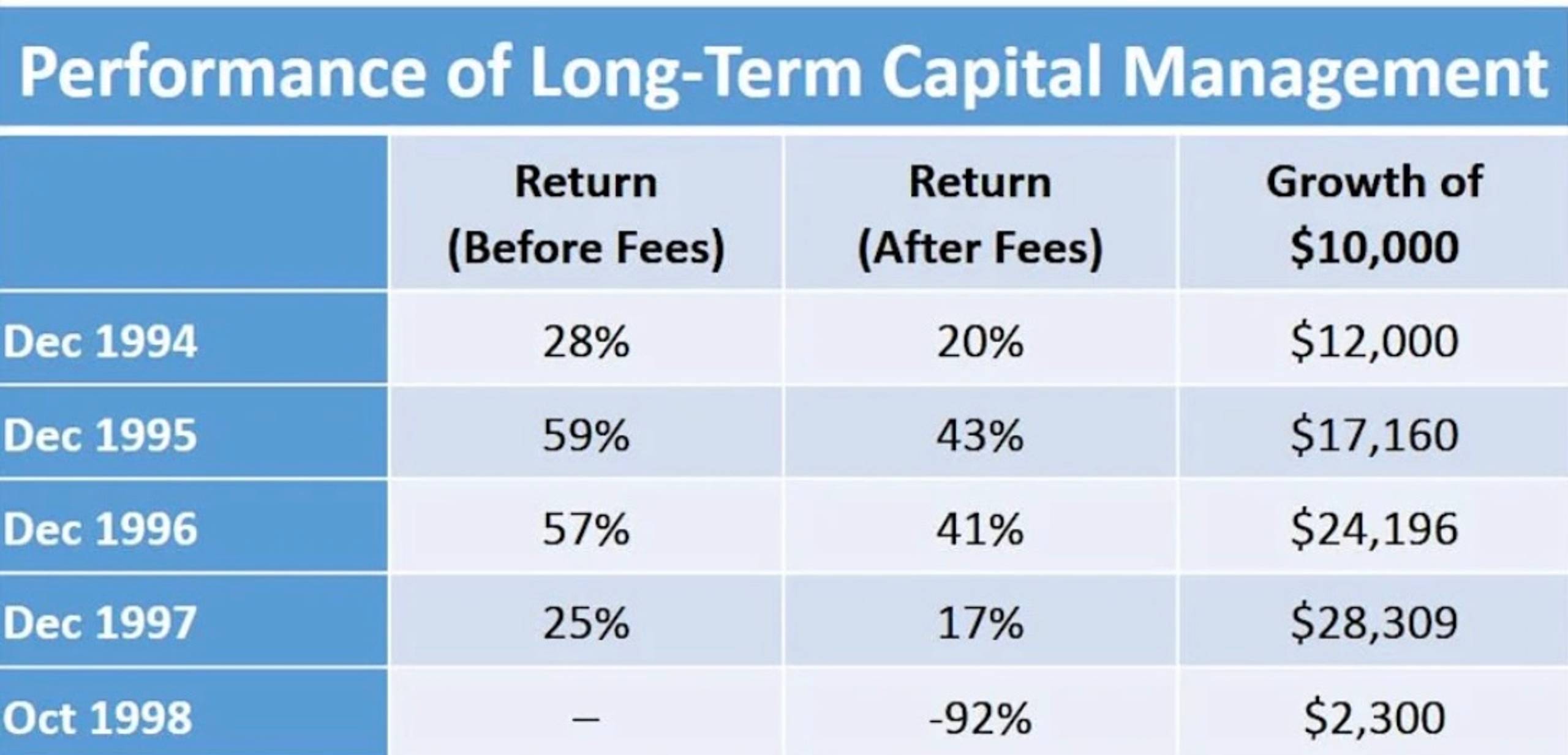
But the fun of the book is not just in the schadenfreude. It is learning from the amazing breadth of investing mistakes that genuinely brilliant people (two Nobel Prize winners!) make throughout the tale. I have told more than a few young people that if they can read the book cover to cover, and genuinely appreciate and understand everything that is happening, they have the right to start managing money.
The book is timeless in its lessons, but I think really deserves a re-read in today’s environment. Like I said, the LTCM investment process was a complex web of math that all boiled down to the same core assumption: that tomorrow would look like yesterday. There was little to no thought given as to why yesterday looked the way it did and zero wrestling with whether tomorrow could look different and what that would mean.
In the era between the global financial crisis and 2025, betting that tomorrow would look like yesterday worked well. Liquidity was abundant, globalization and free trade were in full effect, the world was at peace by historical standards, and the US role in the world was a well-known and well-understood stabilizing force.
Now, the tectonic plates that underpin and shape markets are shifting. Geopolitics and the role of the US in the world has changed. Trade policy has changed. The growth in US labor supply via immigration has changed. The tradeoff between cheap supply chains and secure supply chains has changed. The Fed’s response function to economic conditions has changed. Valuations have changed. And alongside all of these macro shifts, AI is starting to reshape nearly every aspect of modern life in ways that we can’t yet anticipate or even appreciate.
I don’t know what 2026 will look like for markets. No one does. But of all of the possibilities, the most surprising outcome for me would be for things to continue to look the same. Don’t bet the farm on tomorrow looking like yesterday.