A Rosetta Stone for Markets
When you listen to financial commentators, they will often say things like "the market is expecting inflation to fall" or "the market thinks growth will be strong" or "the market expects the Fed to cut interest rates." In other words, they are translating the prices of financial markets into what that implies about the real economy. But how does that work? In notes like this we want to show you how to translate the pricing of markets into real-world implications, starting with what the markets are saying about inflation right now.
Currently, the market expects inflation to average 3% over the next year, 2.7% over the next 5 years, and 2.45% over the next 10 years. In other words, the market does not expect the Fed to be able to get inflation down to their 2% target or lower in the next decade.
We see these numbers by examining how much the US government is paying to borrow money. The US government does its medium and long-term borrowing in two different ways. They borrow through regular treasury bonds, which pay a fixed coupon that creates the yield of the bond. They also borrow via what are called Treasury Inflation Protected Securities, or more commonly called "TIPS." TIPS pay you a "real yield," meaning a yield that adjusts with inflation. For example, today the 10 year TIP real yield is about 2%. So if inflation over the next 10 years is 0, they will pay 2%, and if it is 10%, they will pay 12%.
The difference between the yields on these two types of bonds is commonly called "break-even inflation (BEI)" because it is the rate of inflation where the total return of the two types of bonds would be the same. BEI is a good indicator of what market participants think inflation will be, because if it wasn't, one type of bond would be too cheap and one would be too expensive and investors would act accordingly until the discrepancy disappeared.
One question you might ask then is, how will the Federal Reserve react to inflation that is stubbornly above their target? This is an easy one to look up, since there is a market where you can bet on this directly. I'll spare you a click here - the market is saying that the Fed will reduce interest rates by about 36bps this year, or about 1.5 normal cuts of 25bps. More easing into sticky inflation!
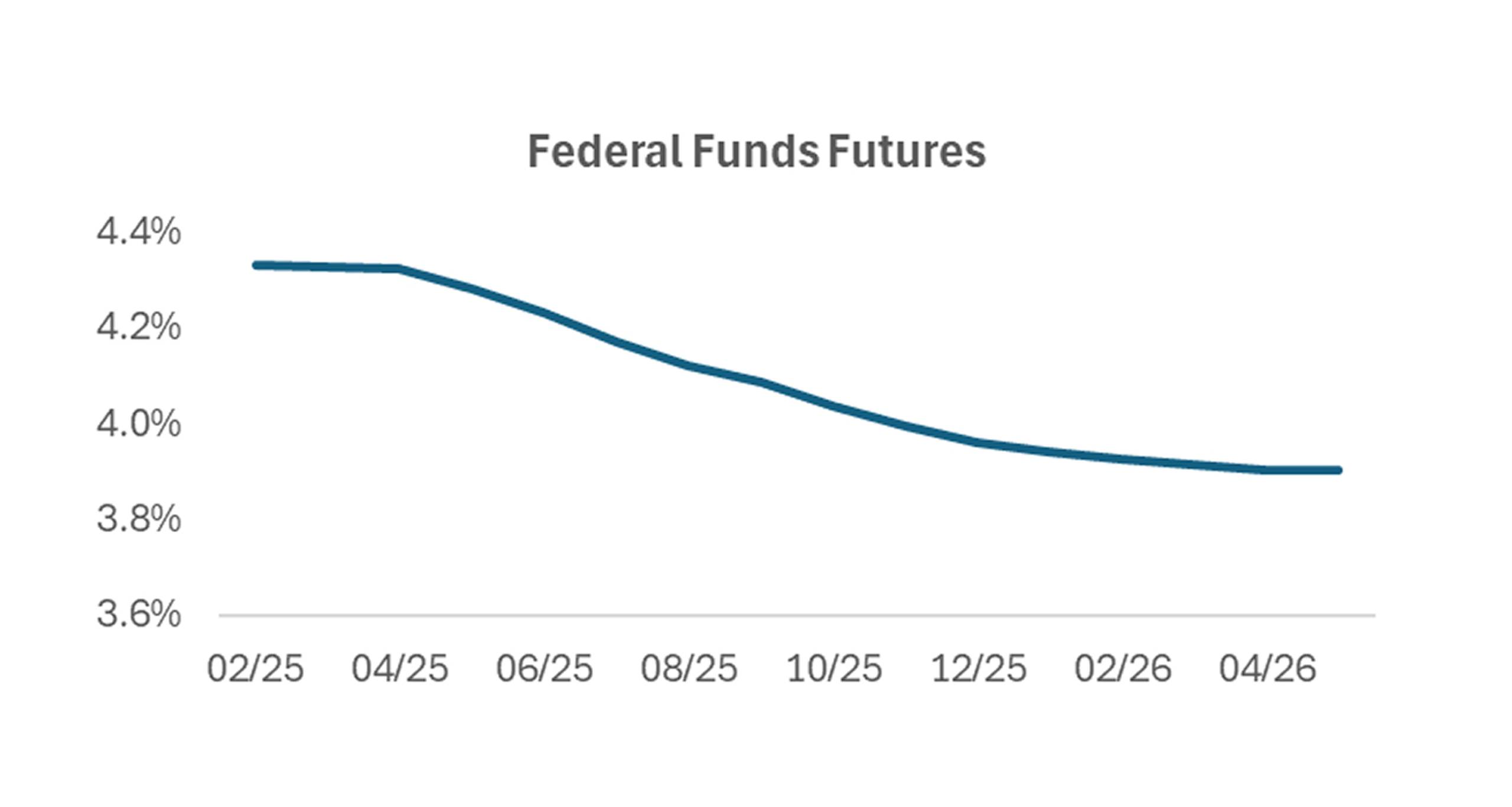
Federal Funds Futures
An important driver of inflation, particularly short-term changes in inflation, is energy prices. Like with Fed interest rate policy, this is a market where you can bet on it directly. The chart below shows the expected price of oil at different points in the future (link here). As you can see, the market expects oil prices to steadily fall for the foreseeable future.
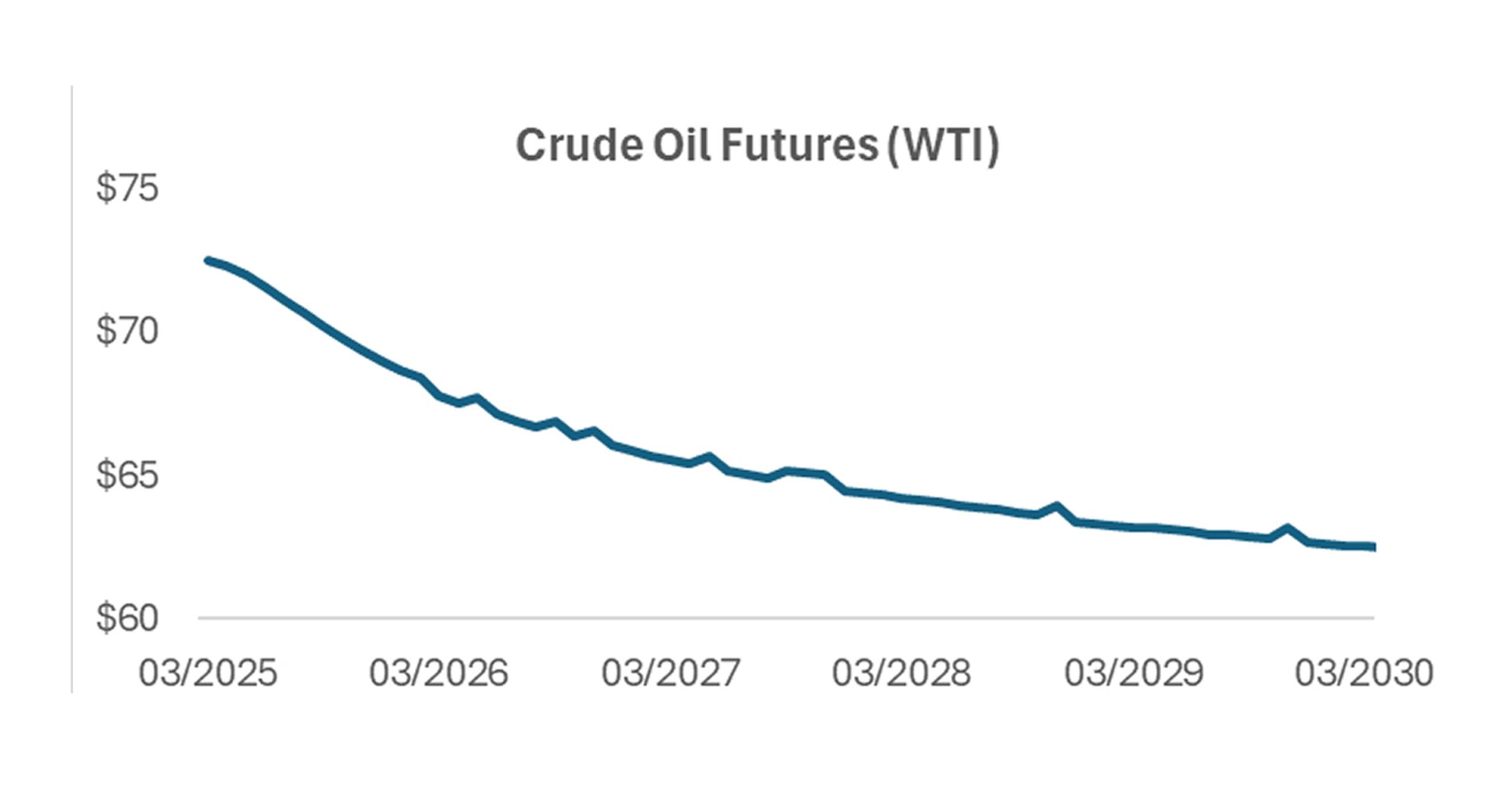
Crude Oil Futures (WTI)
So what do we see when we put it all together? We see a market that thinks inflation will be too high even with a tailwind of falling energy prices, and will be even higher if energy prices are flat or rise. And despite that, the market thinks the Federal Reserve is going to keep lowering interest rates. To us, this combination of events is unlikely and creates good risk/reward trading opportunities in betting against it.
As always, let me know your feedback and thoughts!